Week of October 26, 2026

Event Roundup: Monday, October 26 → Sunday, November 1
Happy Monday! Tomorrow night we've reserved a theater at Boulevard Cinemas for a private Porches screening of You Can See Everything, Nathan Fielder and Lance Oppenheim's new film about Elizabeth Holmes, and can't wait to watch it with the lucky few who were able to score a ticket. It's also Halloween week, and we've got a séance marking 100 years since Houdini's death and a whole town full of trick-or-treaters to look forward to this weekend. Here's what else is on my radar this week:
Tonight! Monday, October 26
Benefit for Global Healing feat. Paul Thorn — The Big Easy, 128 American Alley (Doors and dinner 6pm, show 7:30pm · Ticket prices vary) Tupelo, Mississippi's Paul Thorn brings his bluesy Southern roots music to the Big Easy for a benefit concert and silent auction. Proceeds support Global Healing's pediatric and maternal care at a hospital in Roatán, Honduras. Tickets here.
Tuesday, October 27
You Can See Everything: Private Screening for Porches Members — CinemaWest Boulevard Cinema & ScreenX, 200 C St (6:30pm · Free for Porches members, waitlist only) A24's new film follows Elizabeth Holmes through the 34 days before she reported to prison. The screening is full, but a seat opened up just this morning, so join the waitlist on the event page if you'd like to to be notified if more tickets become available.
Wizards of Elixirs Cocktail Competition — Brewsters Beer Garden, 229 Water St (6:30pm to 8:30pm, VIP hour at 5:30pm · Tickets on Eventbrite, 21+) Bartenders from Fern Bar, Wilfred's Lounge, Little Saint, Solbar and more compete for the judges' podium and the people's choice award, and there's a prize for best costume. Proceeds go to Una Vida and Petaluma Active 20-30. Tickets here.
Friday, October 30
Petaluma's Houdini Séance: The Centennial Gathering — Petaluma Historical Library & Museum, 20 4th St (7pm to 9pm · $40 mezzanine, $50 standing, $100 for a seat at the séance table, 21+) On the eve of the 100th anniversary of Houdini's death, psychic medium Jenessa Wyatt will try to reach him using the secret code he and his wife Bess agreed on. It carries on the Halloween séance tradition Bill Soberanes started here in 1964, and every ticket includes a reception with cocktails, small bites, tarot, magic and local history (sponsored by @Griffo Distillery and Moonlight Brewing). Lizzie Wallack and I will be there and will report back! Tickets here.
Mdou Moctar — Mystic Theatre, 23 Petaluma Blvd N (Doors 7:30pm, show 8:30pm · $29.50 to $45, 21+) The Tuareg guitarist from Niger is playing a solo set at the Mystic, with Orchestra Gold opening. Tickets here.
Saturday, October 31
Trick or Treat Trail — Downtown Petaluma (3pm to 5pm · Free) More than 75 downtown businesses are handing out candy to costumed kids along Kentucky St, 4th St, Western Ave, Petaluma Blvd and Theater Square. Look for the signs in shop windows, or grab the pumpkin trail map here.
Night of the Chicken Dead — Hall of the Above, 199 Petaluma Blvd N (7pm to 11pm · Sold out, 18+) Hall of the Above is celebrating Halloween by unveiling a fossil of a prehistoric bird, billed as an ancestor of today's chickens. Six DJs play across two dance floors, and there's a haunted henhouse, a tarot reader, a pizza truck and costume prizes judged by local celebrities. It's already sold out, but you can keep an eye on the event page....
71

Mercury Theater Presents “The Black Rider: The Casting of the Magic Bullets,” a Tom Waits musical
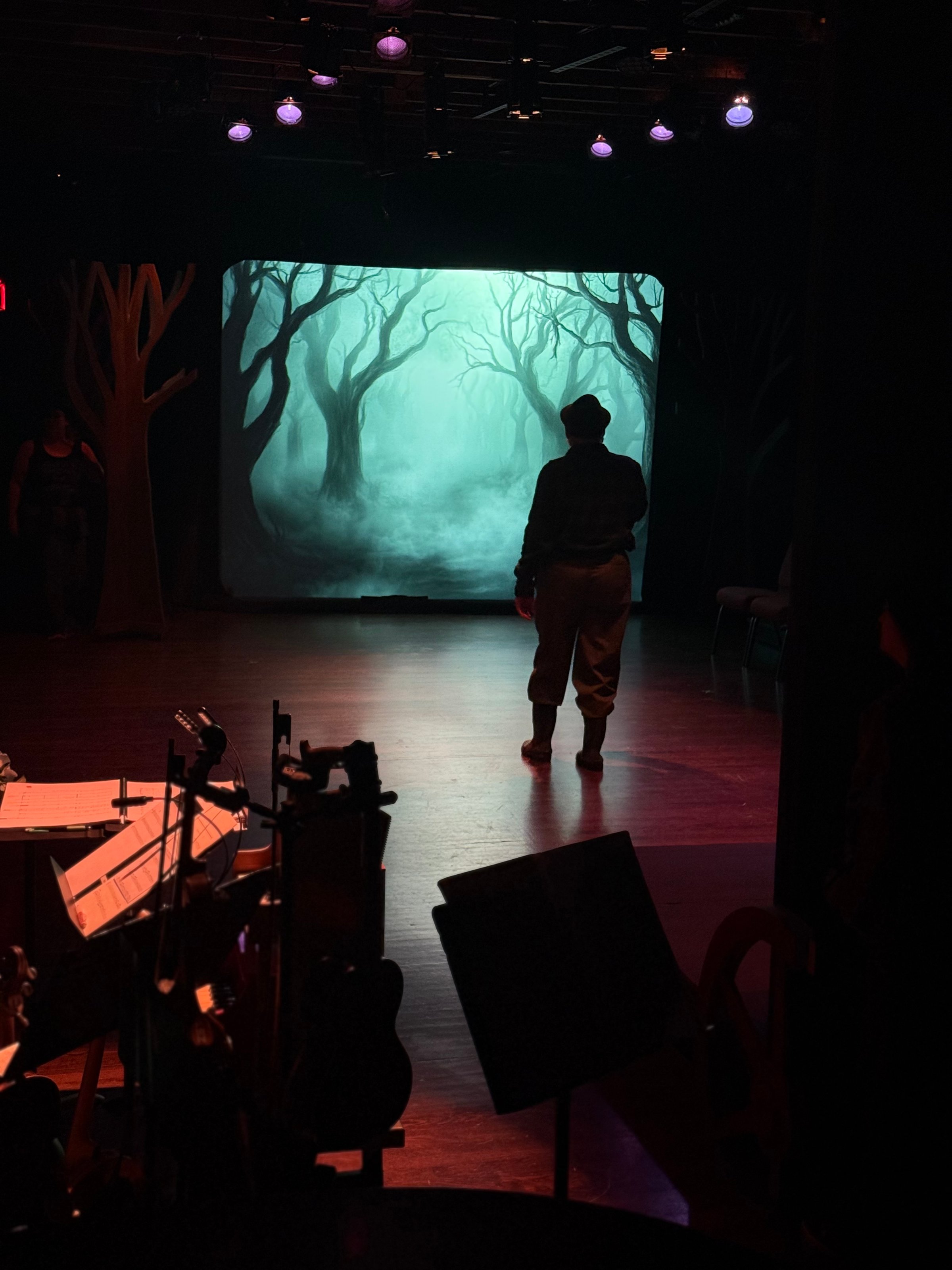
Next week Petaluma’s own Mercury Theater begins its run of The Black Rider: The Casting of the Magic Bullets, a fable by Robert Wilson and William S. Burroughs, with music and lyrics by Tom Waits and Kathleen Brennan. This show is rarely performed in the States, and it’s a perfect, spooky tale for the autumn.
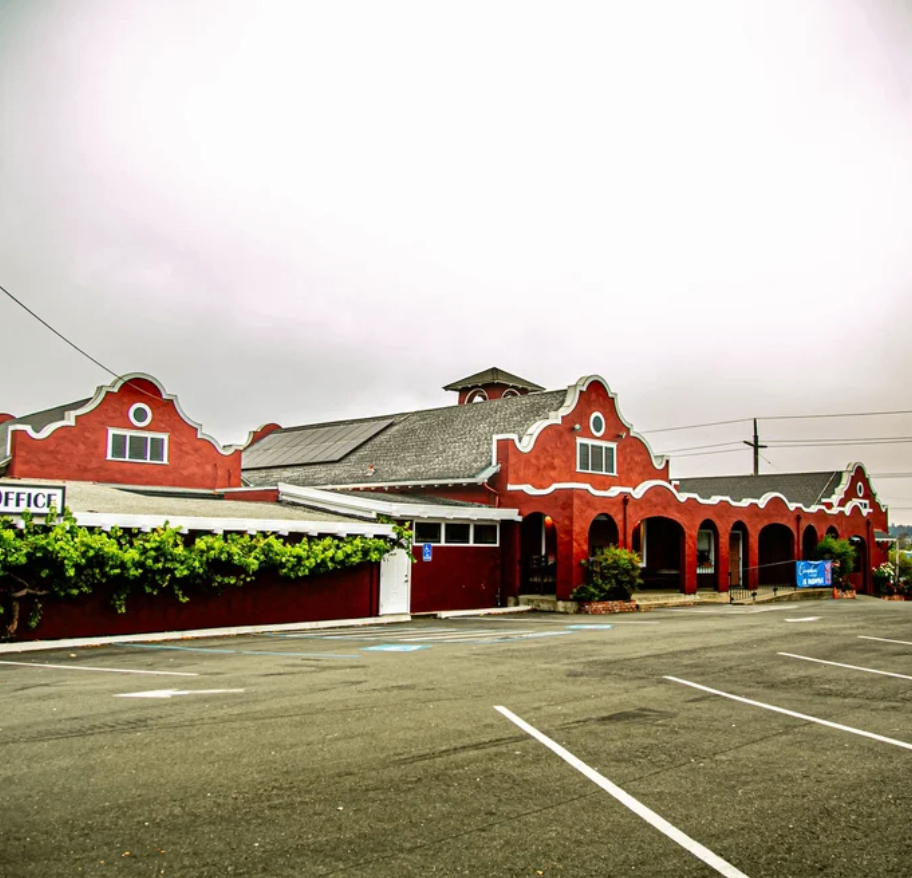
If you’ve never been to Mercury Theater, it’s well worth a visit. The building started life as a schoolhouse in 1916, but was purchased and turned into the Cinnabar Theater in 1970 by Marvin and Jan Klebe. In 2024 it changed hands to become the Mercury Theater, and is now run by the nonprofit Performing Artists Coalition for Theater (PACT), which previously ran MainStage West in Sebastopol. The Klebes’ legacy of bold, accessible "Blue Jeans Opera" and grassroots theater lives on through their commitment to providing a platform for diverse artistic voices in Sonoma County. Mercury Theater is a vibrant collective of local artists and performers dedicated to revitalizing this historic space.
My friend Jared Emerson-Johnson (born and raised in Petaluma) has spent the last few years as President of the Board of Directors at the Mercury Theater. Jared is an incredible musician, composer and human being. He has composed and done sound design work for some major movies and video games, so there’s a good chance that you’ve heard some of his work without even realizing. You may have also seen him performing around town with his jug band, Rivertown Skifflers. (He even has a Wikipedia page so you can read all about the amazing work he’s done!)
Jared is the musical director for The Black Rider, and he is so excited about it. When I asked him why he chose The Black Rider out of all the possible productions, he said, “It’s been a dream show for me for a long time…It’s rarely performed and it's a unique artistic collaboration of heavy hitters…and timely in the sense of being about our human desire to take the quick path to what we want rather than doing the work, which plays into politics and everything about life in the 21st century.”
I also asked Jared what Tom Waits fans (myself included) can expect from his writing for the stage. He said, “The music is a wide variety going from cabaret to vaudeville to opera to pirate folk to atonal avant garde stuff to carnival to jazz standards. Eclectic is the rule for this piece.” If that’s not musically intriguing, I don’t know what is!
The Black Rider is a self-billed "musical fable" in the avant-garde tradition. Although based on folklore, the story contains strong autobiographical elements from Burroughs’ own life. The story as a whole may be construed as a cautionary tale about the destructive powers of addiction.
Jared did note that it might not be suitable for very young kids, not because of any egregiously inappropriate content, but because it's a very dense and poetic book. He said, “It’s heavy stuff, but also really fun in a weird balanced way. The setting is very fable-like and silly a lot of the time though. Fairy tale from hell!”
The show is being directed by Doyle Ott, and features the wonderful local Petaluma actress and theater teacher, Lisa Flato. I am a huge fan of Jared, and the Mercury is an incredible resource for Petaluma. Definitely check it out and support local music and theater. (Lombardi's | Gourmet Deli & BBQ across the street is a delicious place to grab dinner beforehand!)
It will run from October 30 - November 15, and tickets are on sale now at www.mercurytheater.org or at the theater 3333 Petaluma Blvd N....
113
Week of October 19, 2026
Creative reuse projects for kids
Field tested and approved by Cloudland students
The first signs of fall weather are euphoric for me: the way the light bends, the reappearance of comfy sweaters in my closet, the smell of soup on the stove... But, as the mother of two boys this spell is reliably broken by the days of waning sunlight. The wrestling matches and sword fights I enjoyed from a safe distance in the summer are now relocated to my kitchen. The pit digging and water play are replaced with elaborate forts composed mostly of living room furniture (never in their own bedrooms). I don’t love this — but they have energy to spend after school, and if they don't pay it down, bedtime becomes a two-hour process...
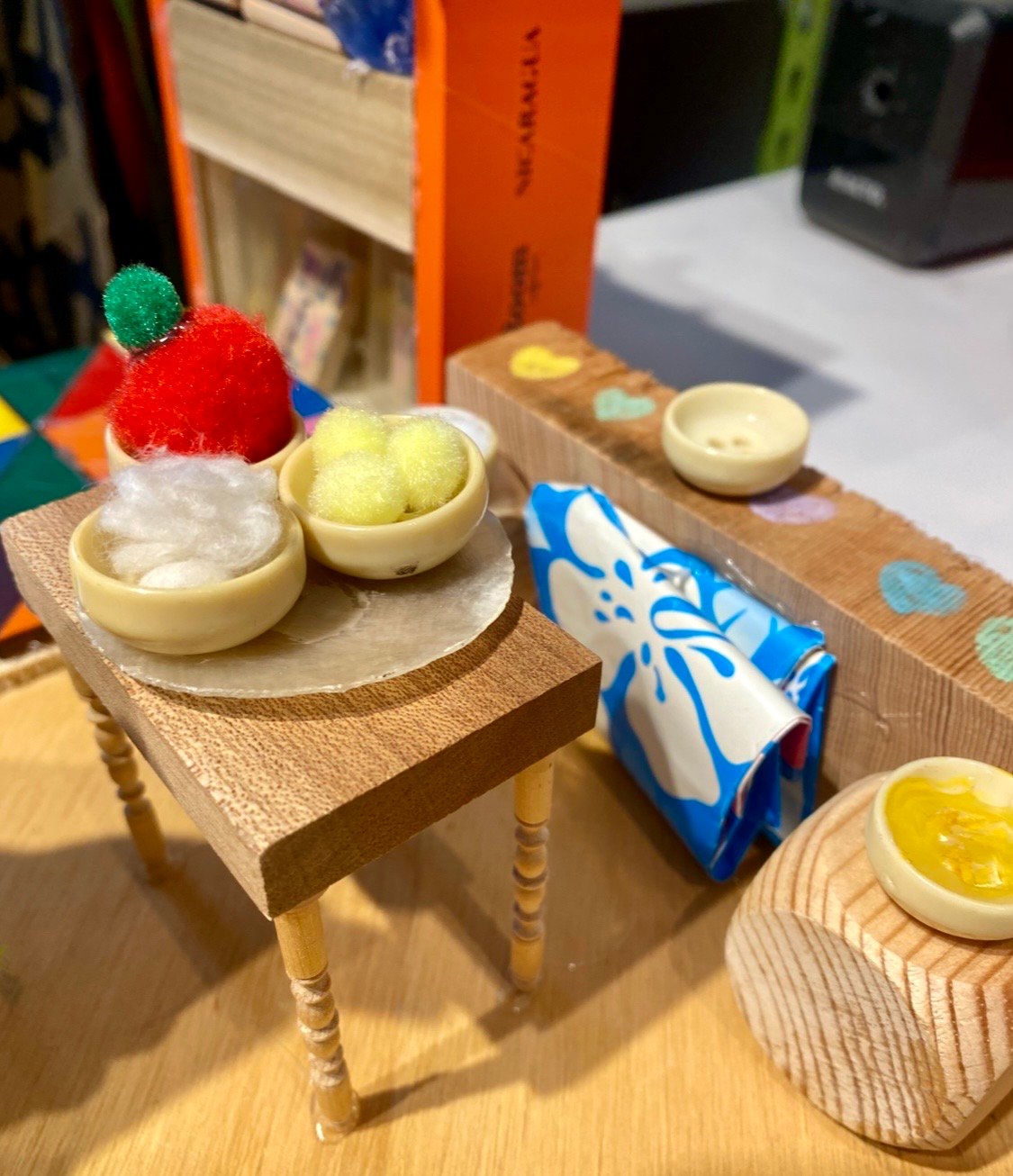
I suspect I’m not alone, so I thought it might be helpful to share some art projects and resourcing advice I have refined through my classwork at Cloudland. Upcycle is a concept that underpins both the textile and sculpture courses I teach. The materials I find secondhand are often more interesting, and better constructed, than what is being manufactured and sold today. I also love the thrill of the hunt, and often bring along my six-year-old who loves to dig around the bins of toys, exclaiming “IT’S ONLY A DOLLAR!?!” after finding a coveted Star Wars action figure.
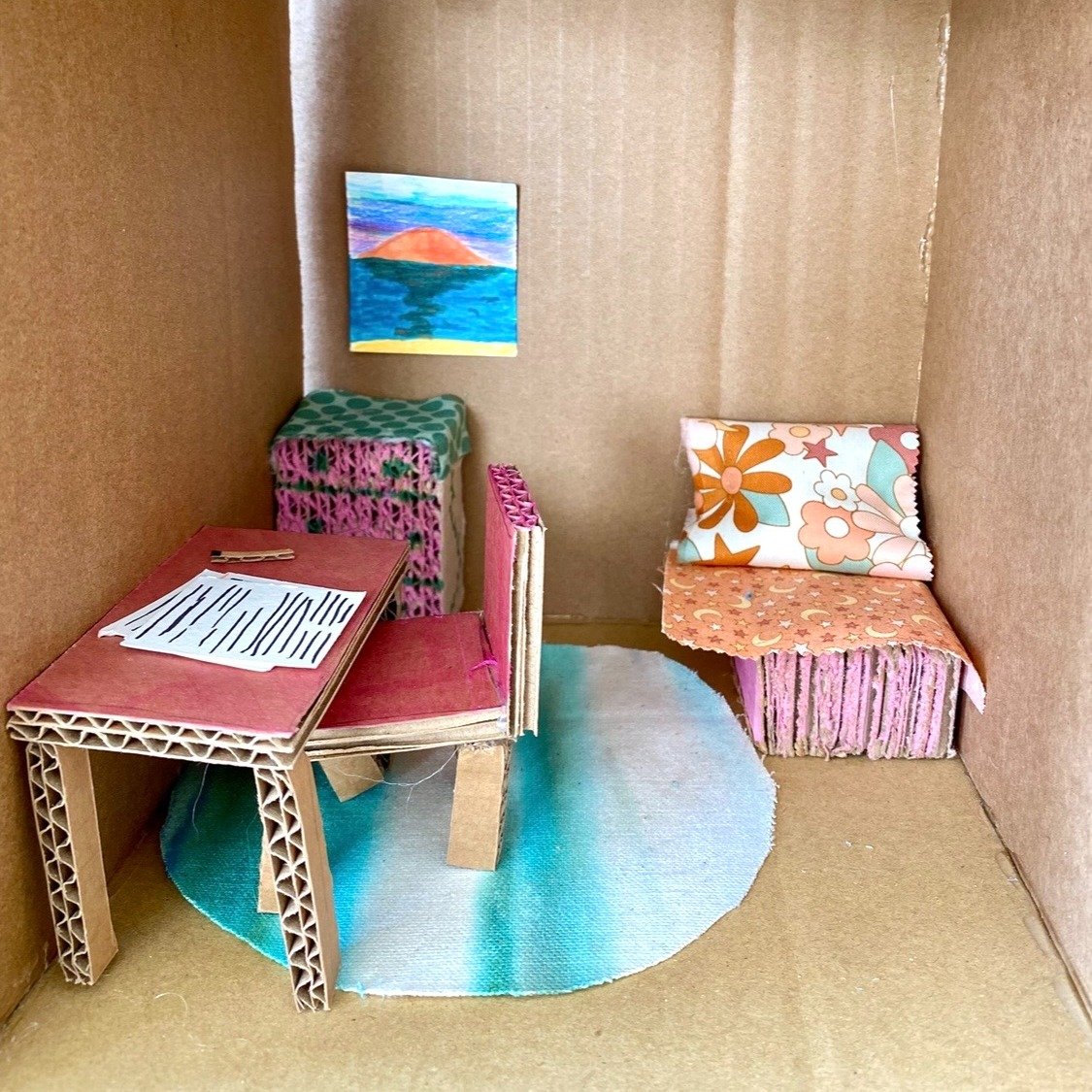
As an Arts Facilitator, I see the best outcomes when students are offered components and given creative freedom (and a glue gun). This process satisfies a need for agency and stimulates creative problem-solving. Once my upcycle sculpture students get cooking, parents often have to drag them away — I’m certain many would prefer a four-hour class. One recurring project that I think would translate well at home is creating a doll house. Furnishing a living space for an imaginary being is a lot of fun. Artists get to make all sorts of decisions: where to put a window, how big is the bed, what color is the carpet, what's on TV? My last class teamed up on one, creating a fully stocked fridge, an art studio and my favorite: a teeny tiny family tree. Its inhabitant was a lamb named “Millie” (a second hand baby chew toy). With the holidays upon us there might be an opportunity to create something with seasonal decor?
My one-stop shop for second hand craft supplies is The Legacy in Sebastopol. This non-profit benefits the Sebastopol Senior Center, and is bursting with fun and affordable treasures for making.
There you can find:
Quilting Fabric and supplies like needles and scissors
Felts and Faux Fur
Knitting supplies
Trims
Lace
Beads
Jewelry and Jewelry making supplies
Storage containers
Art supplies, papers, brushes, glue, ect.
Randoms like flowers, wood and cardboard pieces, doll parts
The store receives a steady stream of donations and is open 6 days a week from 10-4 (10-6 on Thursdays).
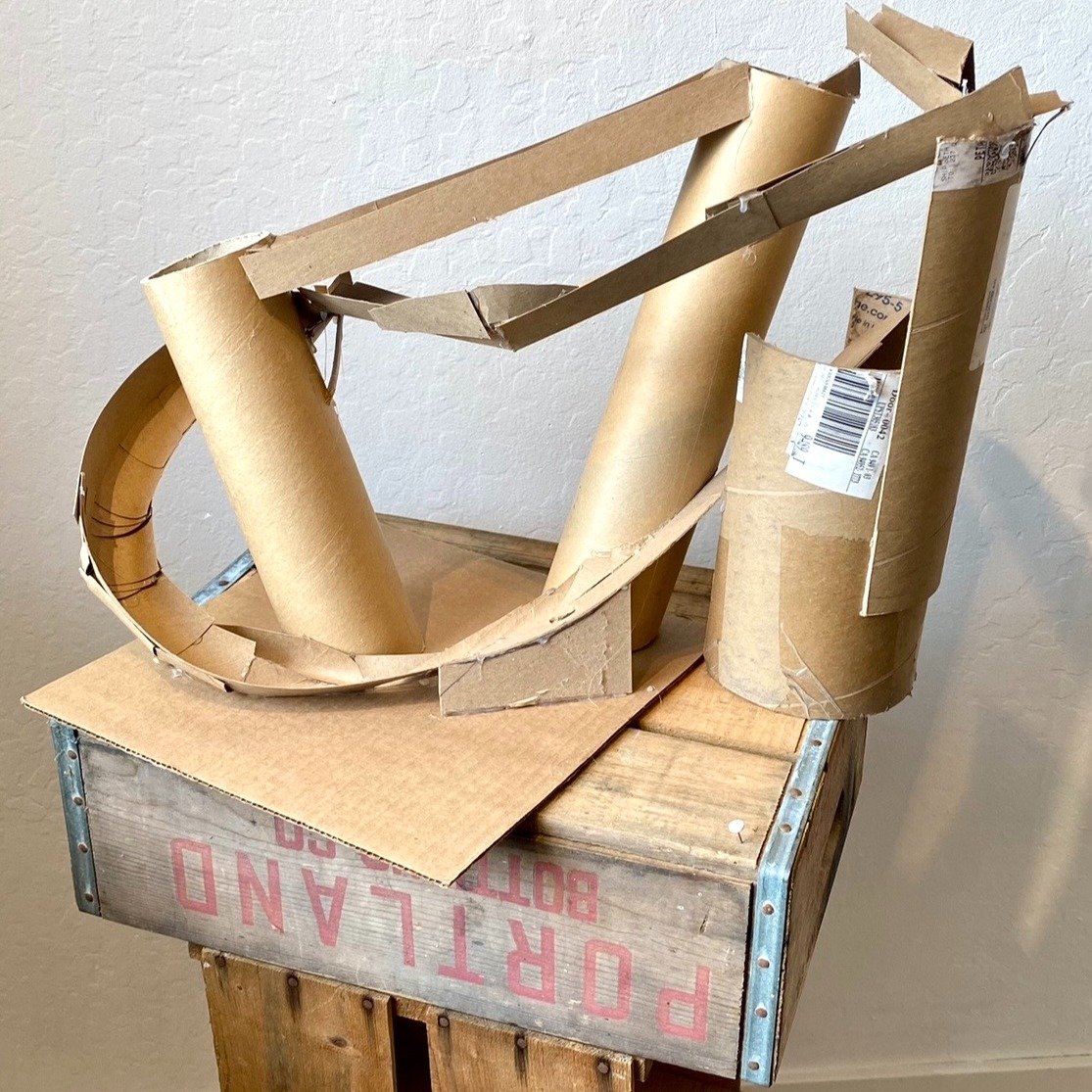
For creators with more industrial sensibilities, making robots and kinetic games is a winner. My oldest child has the aesthetic of a Scandinavian architect, and will spend hours making marble runs out of Keva wood tiles and pingpong balls.
My sculpture students get a lot of mileage out of cardboard, and there are plenty of local restaurants overflowing with available quality recycling. Cloudland is next to Ray's Delicatessen & Tavern, and every Friday, Dusty Resneck, who processes their recycling, materializes at my door like a waitress ready to take my order. Another fabulous resource are framing shops. The sheets of mat board they use to frame the borders of a picture generate piles of perfect little rectangles. They are grateful to see the by-product go to a young artist, and for it to stop taking up space in their studio. Cutting cardboard with scissors sucks, so it's worth investing in a self healing cutting board, a rotary blade, and a big ruler. The blade is sharp, and not safe for littles, but if you take the time to pre-cut some bits for a supply box they should be able to take it from there.
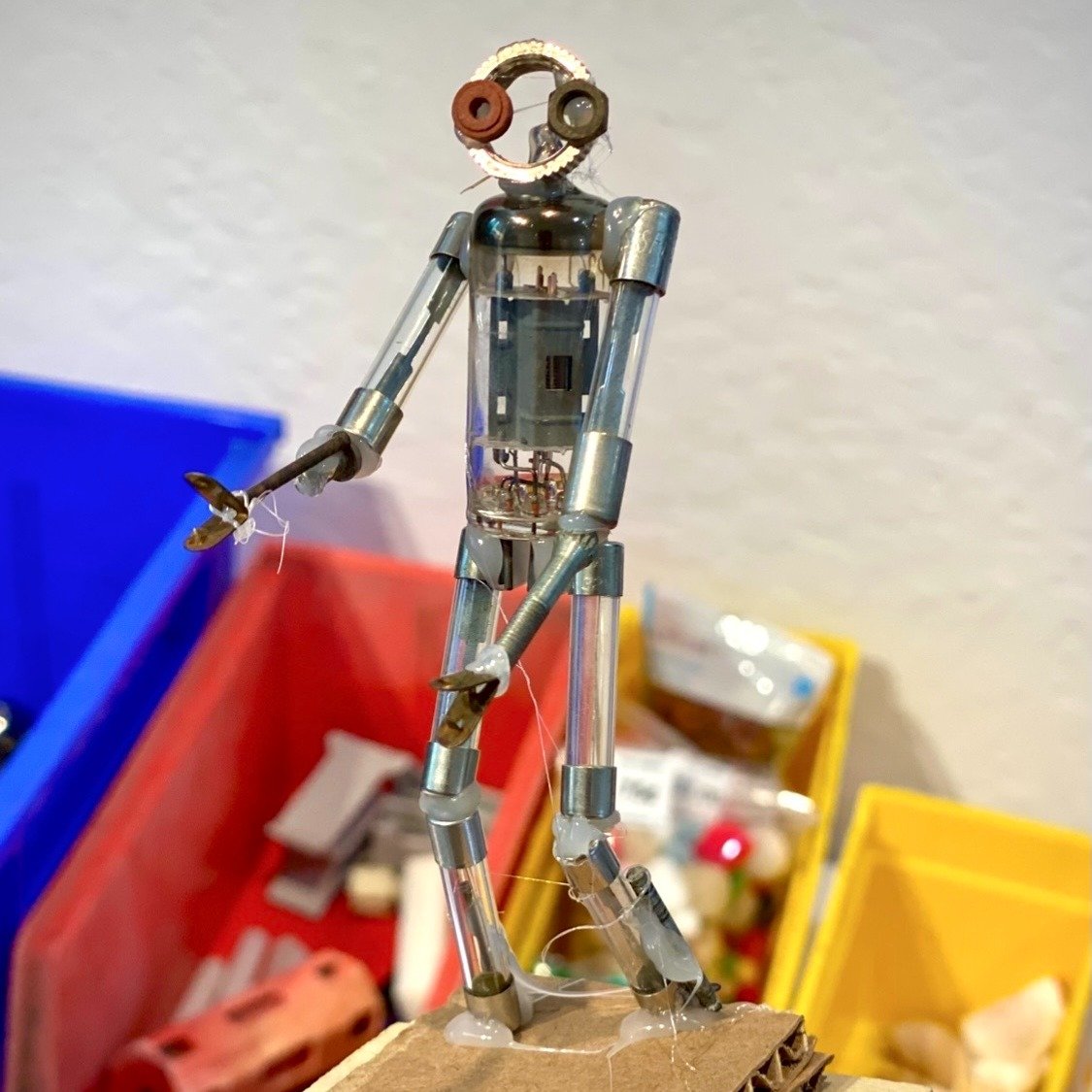
For metal parts I journey to Urban Ore, a three-acre recycling mecca in Berkley curated by artists. There I can stock up on old radio tubes, wires, computer parts ect. They even have the occasional rotary phone – perhaps a fun deconstruction project for the right artist?
Robot sculptures benefit from a base that allows for them to stand independently, and present nicely as they accumulate on your household surfaces. Cabinet makers have the best scrap wood, lovely little cubes of hardwood trims that rarely need sanding.
I recommend broadcasting your interest to any local builder friend, every worksite has a companion pile of scrap wood they are eager to see go..
At the studio we like to end a project cycle with an art exhibition. These events generate a lot of good feelings for both the artist and the viewer. Children have wonderful insights about their process, and art shows create great conditions for conversation. For at home projects, perhaps a lemonade stand-style art sale event could be arranged?
Being able to represent your work in the public is a great point of pride, and making a dollar off something you loved doing makes a lasting impression.
Please drop in the comments with your creative reuse ideas or opportunities I did not mention here;)...
172
Petaluma Job Board: October 23
This week’s curated job roundup spans creative work, food, finance, engineering, and community organizations across Sonoma County and nearby Novato.
Buck Institute is hiring a Senior Science Editor in Novato to write long-form features, interview researchers and shape how the institute tells the story of aging research. Applicants need at least five years of science-writing and editing experience. Hybrid, with four days a week on campus. ($125,000–150,000/year)
Clover Sonoma is looking for an Operations Analyst, Manufacturing & Distribution in Petaluma. You’d work with the numbers behind the dairy’s production and distribution operations, helping teams understand performance and improve how things run. Full-time, on-site. ($70,000–90,000/year, plus bonus eligibility)
Fehr & Peers is hiring an Entry-Level Transportation Engineer or Planner, with Petaluma among the office options. A starting point for someone interested in how people move through their communities, with projects involving walking, cycling, transit, traffic and street design. Full-time, on-site. ($94,000–97,000/year for Petaluma)
Gold Ridge Bar & Kitchen is looking for a General Manager to help launch its restaurant in Sebastopol. An opportunity for an experienced hospitality leader to build the front-of-house team and establish how a new restaurant runs, from service to daily operations. Full-time, on-site. ($90,000–95,000/year)
Immigration Institute of the Bay Area is hiring a Staff Attorney in Petaluma to provide immigration legal services and represent clients, including in immigration court. Spanish fluency and active membership in a U.S. state bar are required. Full-time, with four office days a week for the first three months and possible hybrid arrangements afterward. ($81,000–90,000/year)
Jackson Family Wines is hiring an Associate Creative Director in Santa Rosa to help shape the creative work behind its wine brands, from packaging and campaigns to photo and video shoots. Applicants need a strong portfolio, at least ten years of creative experience and three years managing a team. Note this role has been up for a few weeks. ($110,000–135,000/year)
Leolo Pizza is hiring a General Manager to run its Petaluma take-out shop. You’d make pizza, lead the team and manage food costs, labor and ordering. Kitchen or store management experience is required; pizza or bread experience is a plus. Full-time, on-site, with benefits and potential for a future equity discussion. Apply to louis@leolopizza.com with your résumé and a short example of a measurable result you improved. ($78,000–88,000/year, plus quarterly performance bonus)
Providence is hiring a Chief Financial Officer, Sonoma County, overseeing financial leadership for its Santa Rosa, Petaluma and Healdsburg hospitals. Based in Santa Rosa, this is a senior opportunity for an experienced healthcare finance executive. (Approximately $200,000–357,000/year, annualized from the posted hourly range at 40 hours a week)
Simply Solar is hiring a Controller, Finance & HR in Petaluma to oversee accounting, payroll, benefits and day-to-day administration, leading a small accounting and administrative team. Full-time and primarily office-based, with occasional hybrid days. ($90,000–125,000/year)
Valley of the Moon Music Festival is hiring an Executive Director to lead fundraising, finances and operations for its chamber-music organization. Full-time and hybrid, with regular in-person commitments in Sonoma and around the Bay Area, plus on-site leadership during the summer festival. Candidates must live in the greater Bay Area. Priority consideration for applications received by November 15. ($105,000–125,000/year)...
220

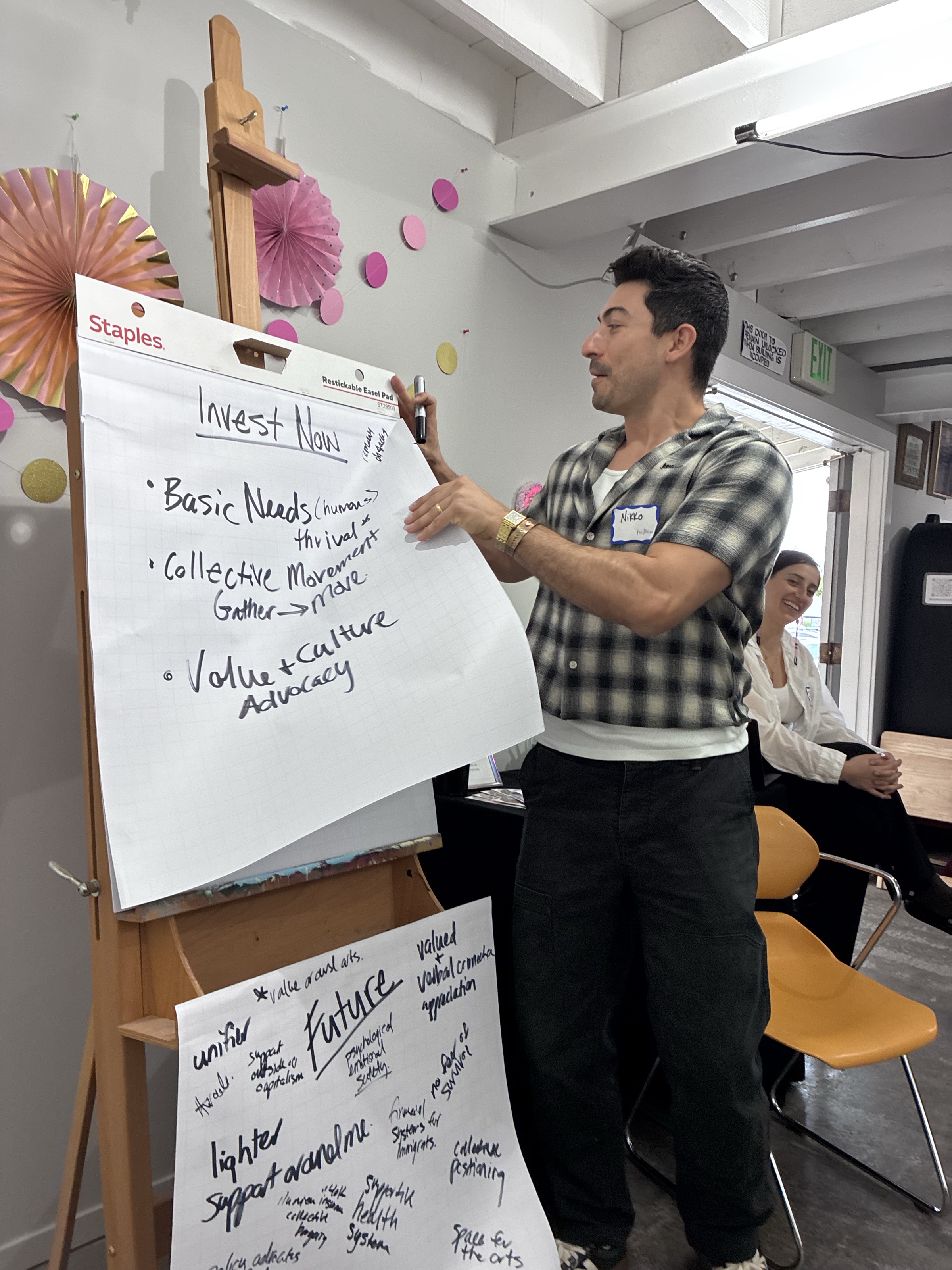
Artists In Arms; Building Bridges of Beauty; Creatives in Community & Coffee Chats.
KIMZIN CREATIVE and Creative Sonoma are hosting a series of community-centered artists talks and coffee chats as part of the State Of The Arts: The Creative Sonoma Arts and Culture Benchmark Study. Participants are invited to reflect on questions focused on access, funding, representation, value and more. All participants receive a $25 gift card for attending.
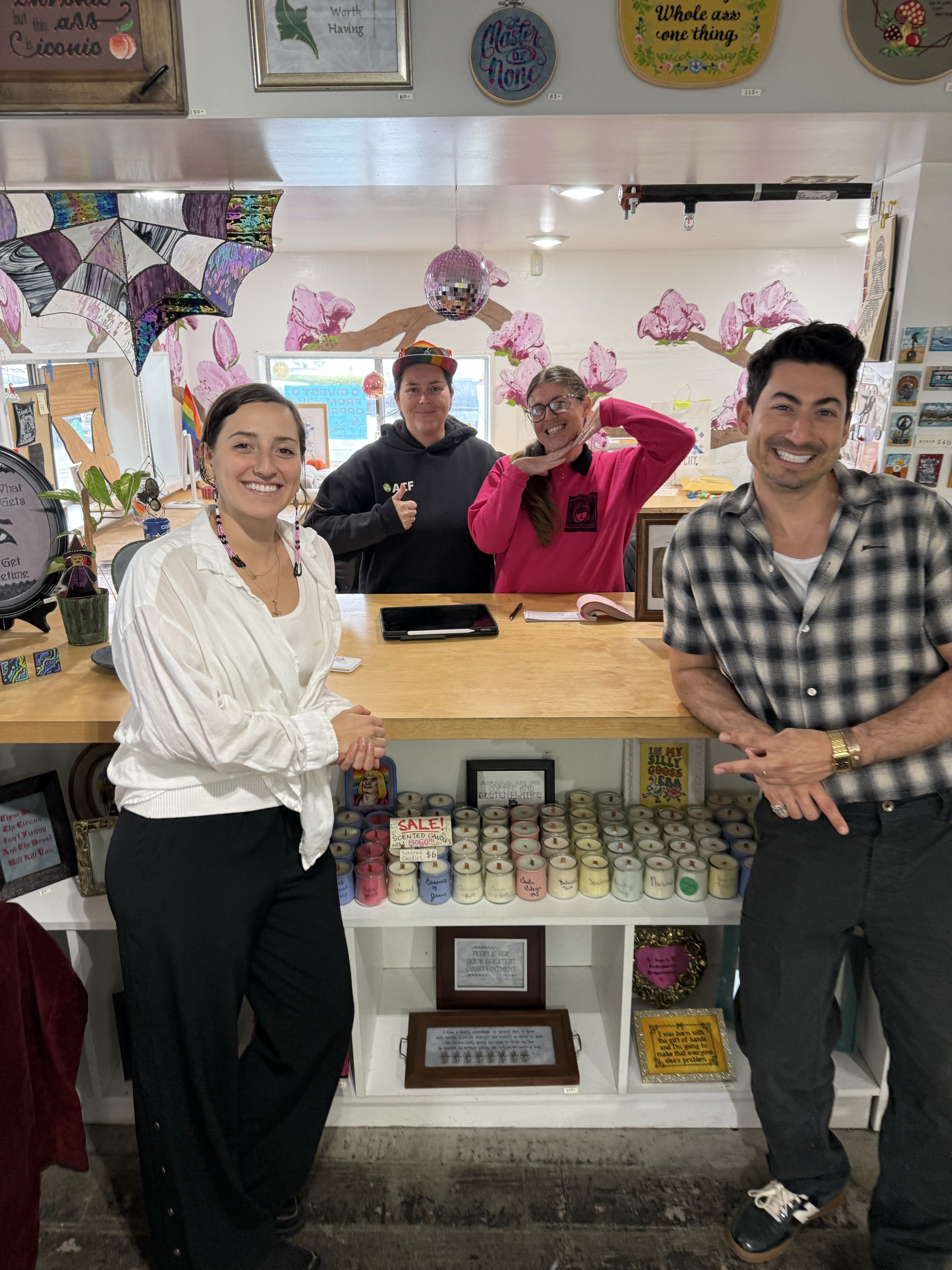
Yesterday, I attended the first of four 90-minute chats at Slough City Studios with the rest happening throughout Sonoma County through Saturday. Before I share my experience and insight, I’d like to list the other upcoming events:
When: Today, Thursday October 22nd
Time: 5:00pm -6:30pm
Where: Arlene Francis Center, Santa Rosa
When: Friday, October 23rd
(Conducted In Spanish*)
Time: 9:00am - 10:30am
Where: La Familia Sana
439 N. Cloverdale Blvd, Cloverdale 95425
When: Saturday, October 24
Time: 5:00pm to 6:30pm
Where: Two Trees Teahouse
3597 Bohemian Hwy, Occidental 95465
Find the RSVP link on the Kimzin Creative social media page here. Screenshot the image, hold the QR code and open link in browser.
It’s important to note that this study has been done before as the 2020 Arts & Culture Benchmark Study that established the first comprehensive baseline for Sonoma County’s creative network surveying between 140 to 160 arts and cultural organizations. You can view the study at www.creativesonoma.org where you’ll find the statistics that confirm the Arts aren’t just a hobby but an industry that brought $80 million through ticket purchases, tourism related expenses like dining and hotels, direct purchases from local businesses for supplies, and more. You’ll also find the $7.4 million in local and state taxes that go to fund public infrastructure, public services, parks and the like. There’s also the job numbers of full time employees ranging from technicians, managers, teachers and other related staff.
At the chat, Nikko called on me to describe WHO Creative Sonoma is and WHAT they do to which I declined to describe after being put on the spotlight despite having perused the Creative Sonoma job boards, sharing posts about their free professional development workshops, utilizing their artists directory and receiving a $10,000 grant from them while Market Manager at the Occidental Community Farmers Market centered on placemaking and public art installations plus performances to inspire social cohesion and celebrate diversity; a grant which enabled me to bring more depth and possibility to what the market could be especially during a year where we saw many funding cuts to the arts and programs deemed to be centered on diversity, equity and inclusion. That being said, I had to refamiliarize myself with the organization.
We are fortunate to have Creative Sonoma in Sonoma County, founded in 2014 and operates as a division of the Sonoma County Economic Development Collaborative. It is funded through a combination of 1) government funding like federal, state and county funds including the Transient Occupancy Tax, 2) state funding from organizations like the California Arts Council and 3) Private Philanthropy and Foundations.
Apart from setting a benchmark for the art sector in Sonoma County, the organization strives to be a hub for artistic development while offering a support system to local artists to access funding, resources, education, increase visibility, create partnerships with local organizations and businesses, enhance public art, beauty, placemaking and so much more.
Why does this all matter?
For me, art has always been the cornerstone of how I relate, explore and engage with the world, from music to technical theater production to acting to film to writing to costume making and the list goes on. It’s the stories that sparked curiosity, connection and compassion. It’s the experiences that strengthened my support systems, friendships and has led many of my career choices. It’s deeply personal all the while intrinsically a part of the collective human experience. As a youth, learning about art movements during the Harlem Reinassance and post WWII counterculture movements during the 1960’s inspired an imagination where art could create collective societal impact.
With all of this, why then do many artists still feel unsupported, undervalued, under-resourced, and as local artist Ash Hayes, founder of the Sonoma County Sketchbook Club, put it as existing in an “underpaid soup”. These were some of the challenges I heard during the 90-minute conversation.
With the current cost of goods and services, many of us may be becoming more familiar with the choice between a gallon of gas and a gallon of milk. However, the cultural trope of the starving artist is something we have all grown up with and for some of us, have kept us from pursuing art as a career or even as an individual practice. The conversation led by Nikko of Kimzin Creative asked artists to step into a portal and envision a world where all their basic needs where met, where their careers are respected and valued, and where more people in the community actively advocate for the arts. Many of the discussion questions seemed centered on the main question of “How do we get there?”.
Despite the 2020 study highlighting the many full time jobs that the arts make possible, the reality is that many artists operate as gig workers that do not have access to retirement plans or healthcare. This also informs the trend where artists are encouraged to monetize their passions where their art practices can only exist in a capitalistic paradigm. Surprisingly, this one instilled a sense of grief in me because viewed through an anthropological lens art used to be something humans just did as part of our individualistic or communal cultural expression and practices or was weaved into our everyday lives even in the architecture of civic design. I invite you all to answer the question about what the value of art is to you and to our community whether that be though your own practice or how you benefit from artistic and cultural practices in Sonoma County.
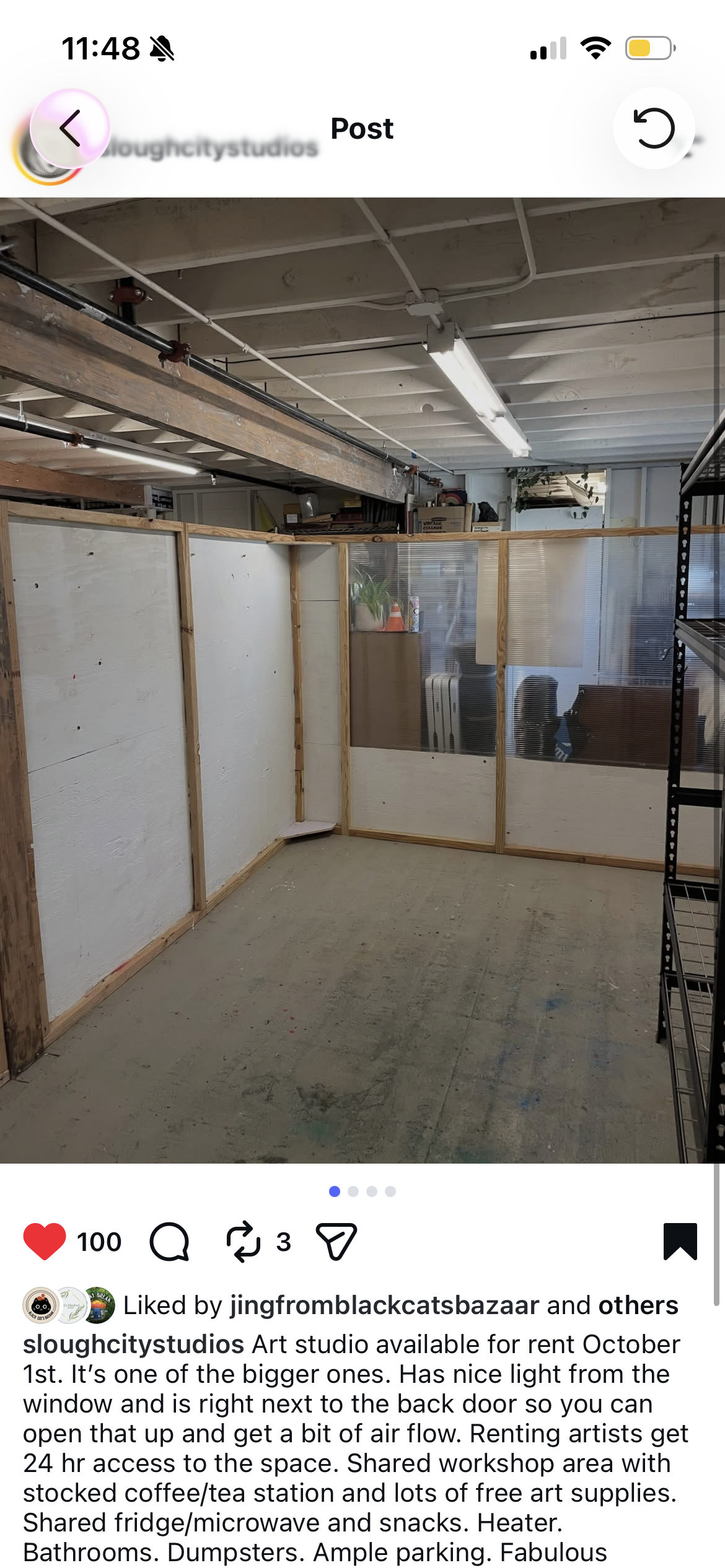
Similar to the ethics of what inspired Porches to connect local neighbors to one another in the real world, many artists voiced a desire and even a need for more collective unification of local artists that includes more than those belonging to Fine Arts guilds including musicians, muralists, graphic designers, writers, event organizers, art teachers, youth mentors, and more. Coming together means advocating for the arts in relation to policy, civic planning and funding, having conversations about our experiences to find solace and solidarity, offering mentorship, skill sharing in grant writing or another expertise, creating connections for access to materials, equipment or spaces for art studios, gallery venues, event organizing, art workshops and more. Some offered that these collectives of artists partner with local businesses for marketing, design and promotion. As we see more use of artificial intelligence in multiple forms of media, I personally appreciate all the local event organizers and small businesses committed to supporting local artists like Mercedes Hernandez, founder of the SoCo Market, who has hired Muralists and Artists Blanca Molina and Graphic Designer Nicky London for marketing and design. Do you know of a local organization or small business that can partner with artists for creative workshops, social media and marketing, or event organizing? Are there any local organizations who can offer artist access to materials, equipment or spaces? I know there’s Slough City Studios that offers affordable studio spaces for artists. (NOTE: one is currently available). There’s also Petaluma Pottery and The Hot Spot Petaluma where people have access to different aspects of pottery. WonderStump also has many cool workshops and events. Grand Central Petaluma and Griffo Distillery & Tasting Bar have partnered with local artists and event organizers for concerts, markets and more.
I share all of this with you to inspire you to attend one of the workshops and contribute to the conversation. Even more, I am writing this as a reminder to myself that these are questions to ponder, conversations that should be held continually and to connect with the people in our community who are excited to build a beautiful bridge to the world that these artists where asked to imagine existing through a portal, which with our collective efforts can be pulled closer to the present....
MS
90

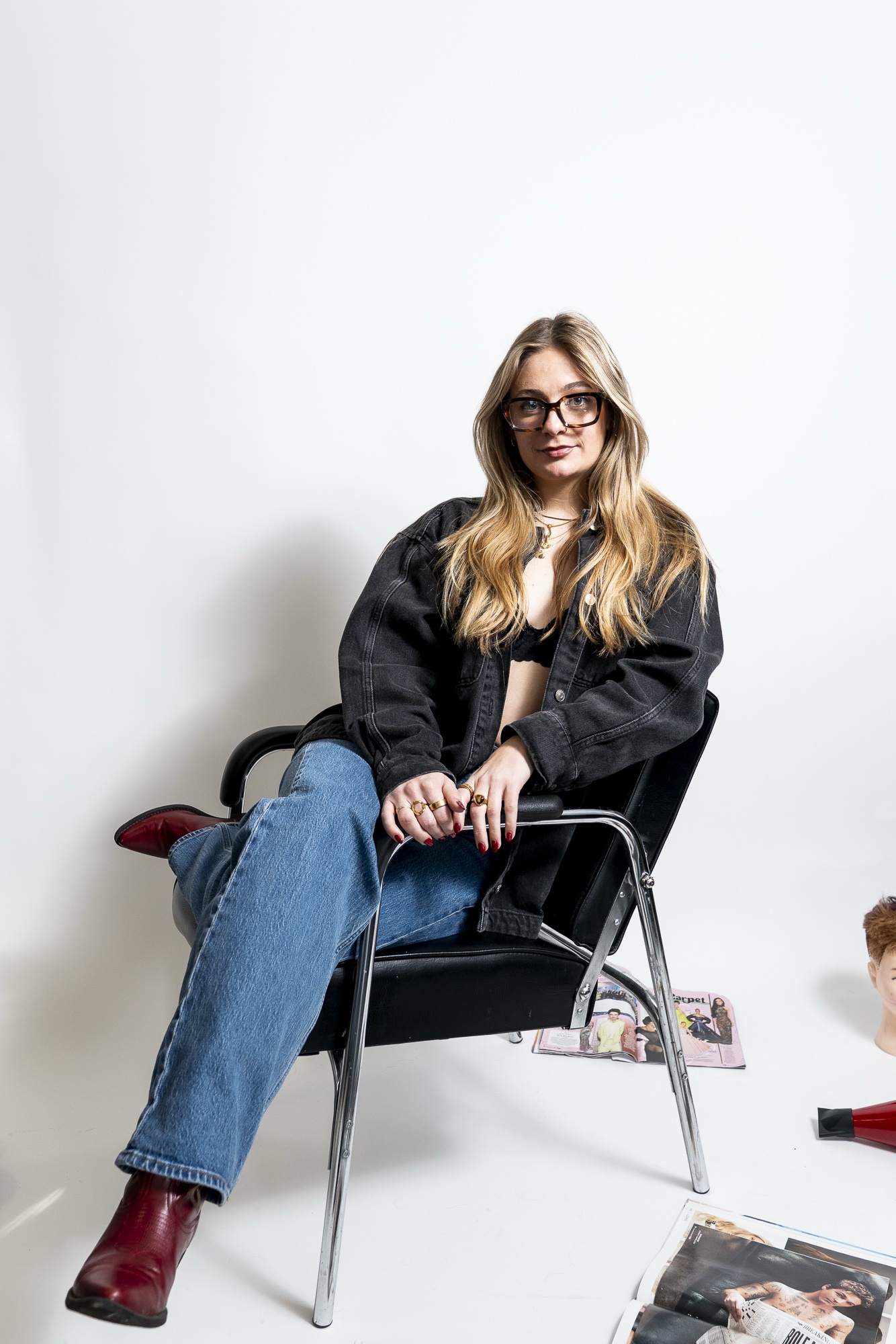
LL Hair Designs
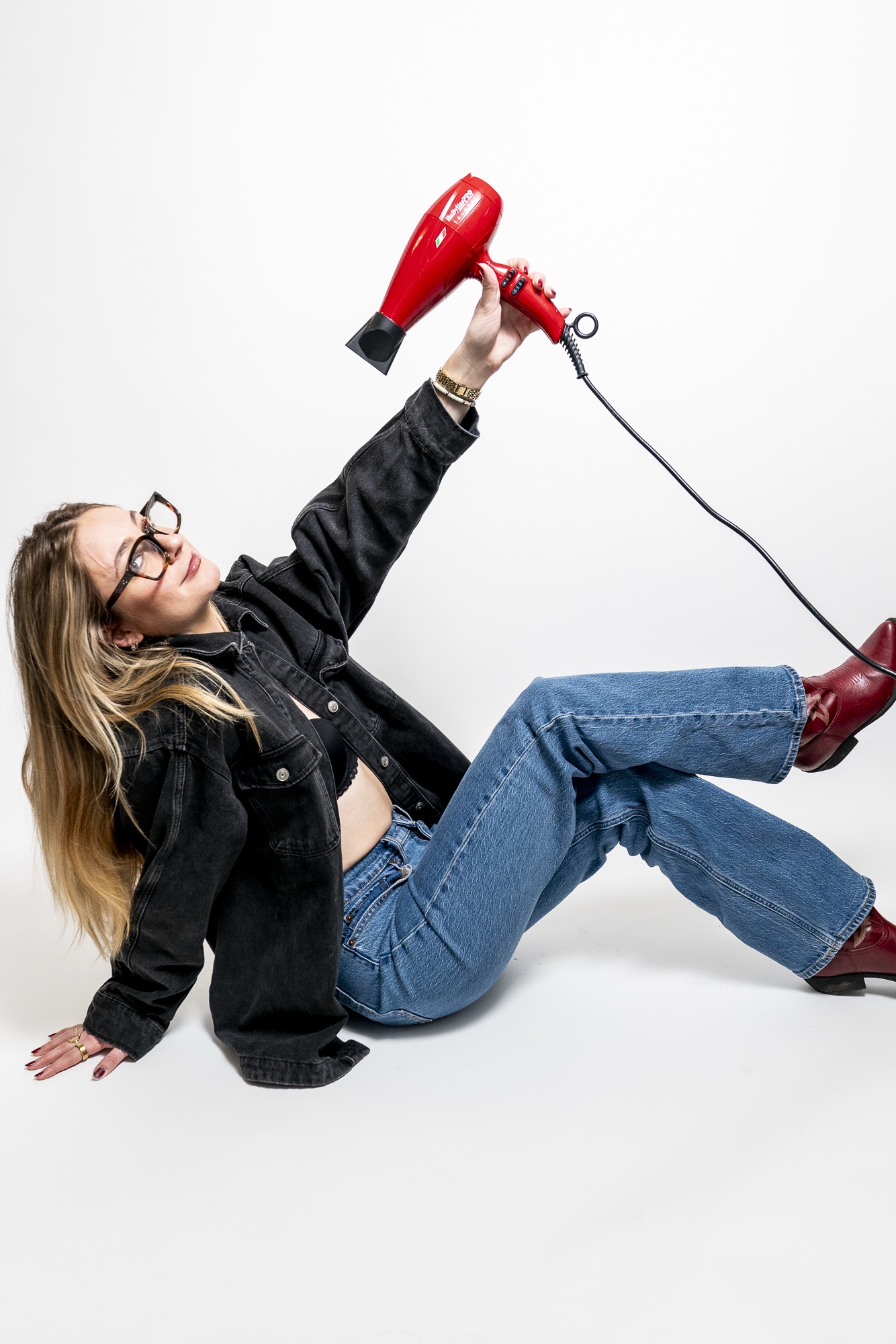
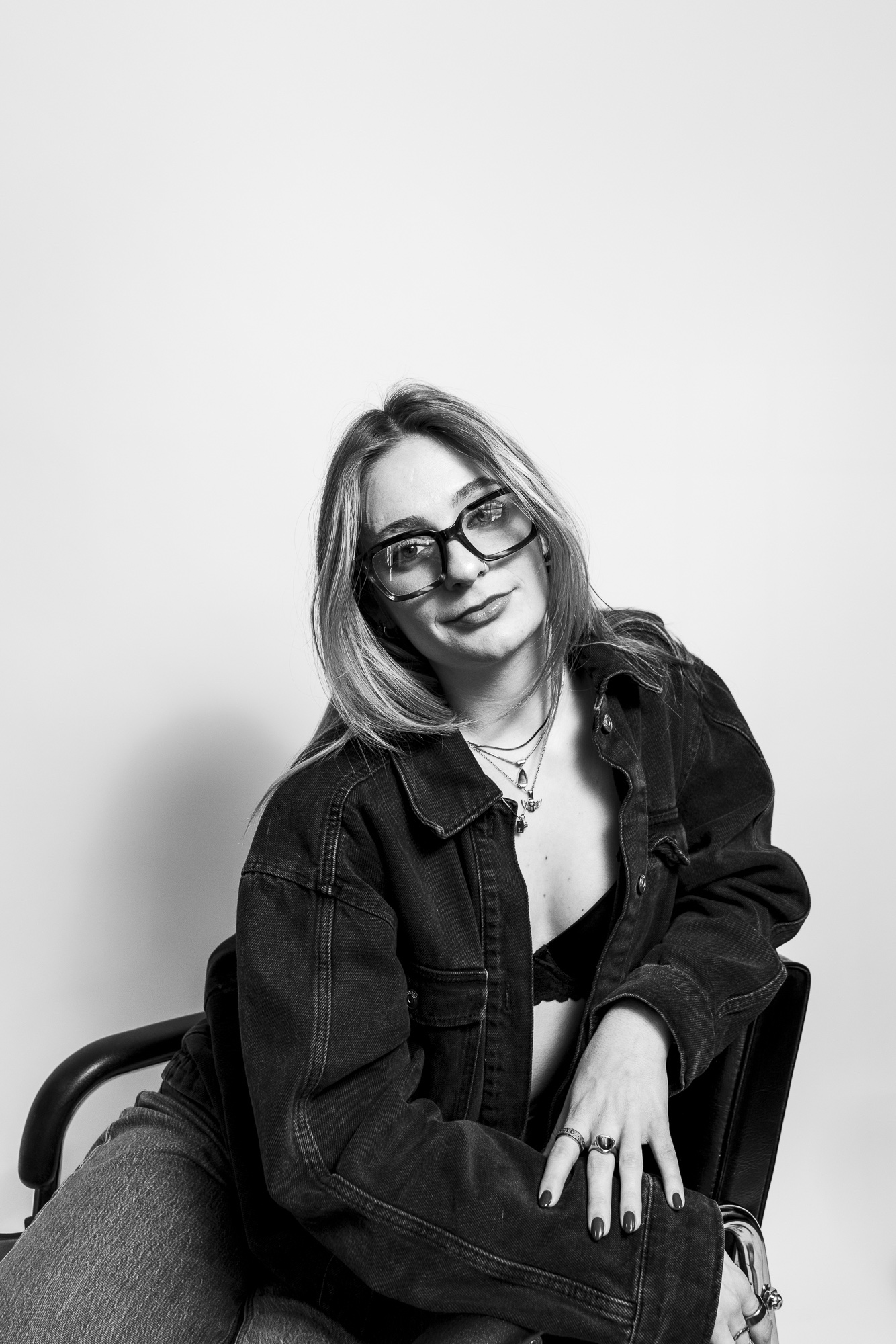
I have the pleasure of having Payton Draper not only as my hairstylist, but also as one of my best friends of thirteen years. Over the last few years, I witnessed Payton rise to the occasion of taking over her late mother’s business, LL Hair Designs, at only 24 years old. Payton, like her mom, has a passion for connecting and talking with people. Payton knew she did not want to do twelve years of schooling to be a therapist, so she went to cosmetology school instead and now she gets to do what she does best: connect with people, listen to their stories, and make them feel more beautiful than when they came to her salon.
Most hairstylists would say the best part of the job is seeing how excited clients are about the final results. Though that is very important to Payton as well, when I asked her what the most rewarding part of being a hairstylist was, she said, “When people fall asleep in my chair.” Payton finds a sense of purpose in creating a comfortable and welcoming space for everyone who finds themselves in her salon. It's not just a haircut you are getting, it is an experience with someone who is willing to make the effort to create a safe space; where the vulnerability of getting your hair cut by a stranger leads to the comfortability needed to fall asleep in an unfamiliar place while sitting upright.
To get in contact with Payton for your next haircut you can reach her @paytondraper.hair on instagram or by phone +1 (707) 775-0493...
235
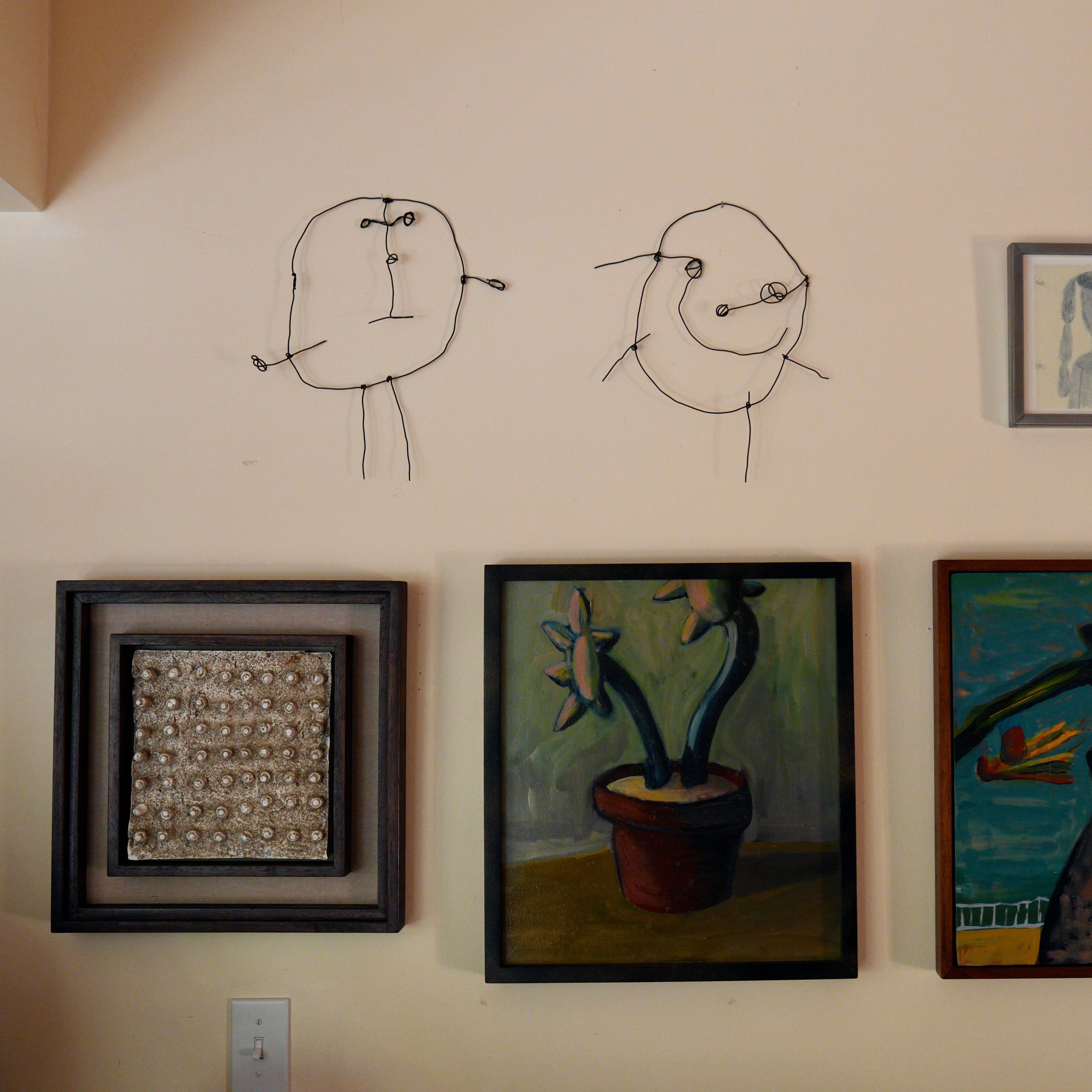
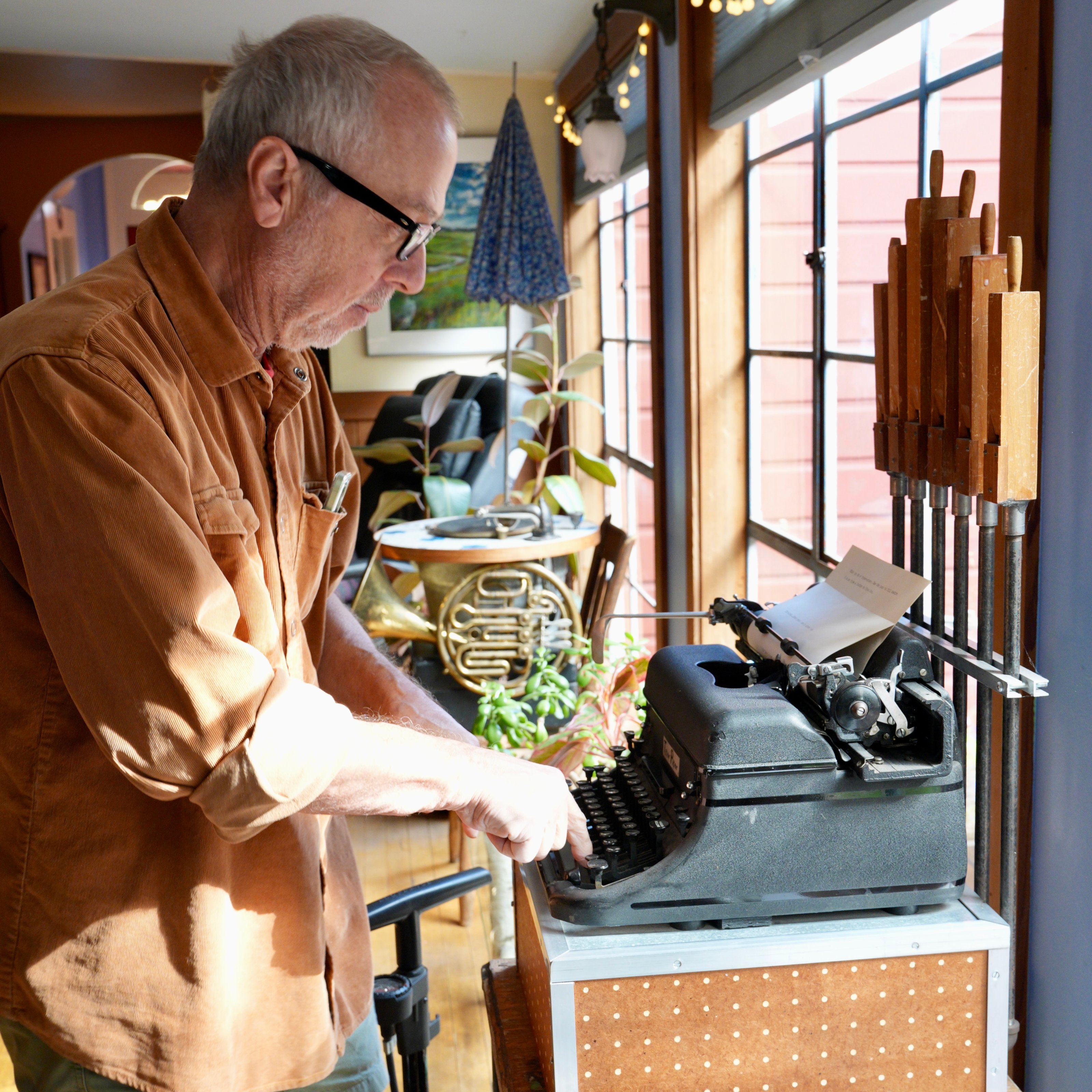
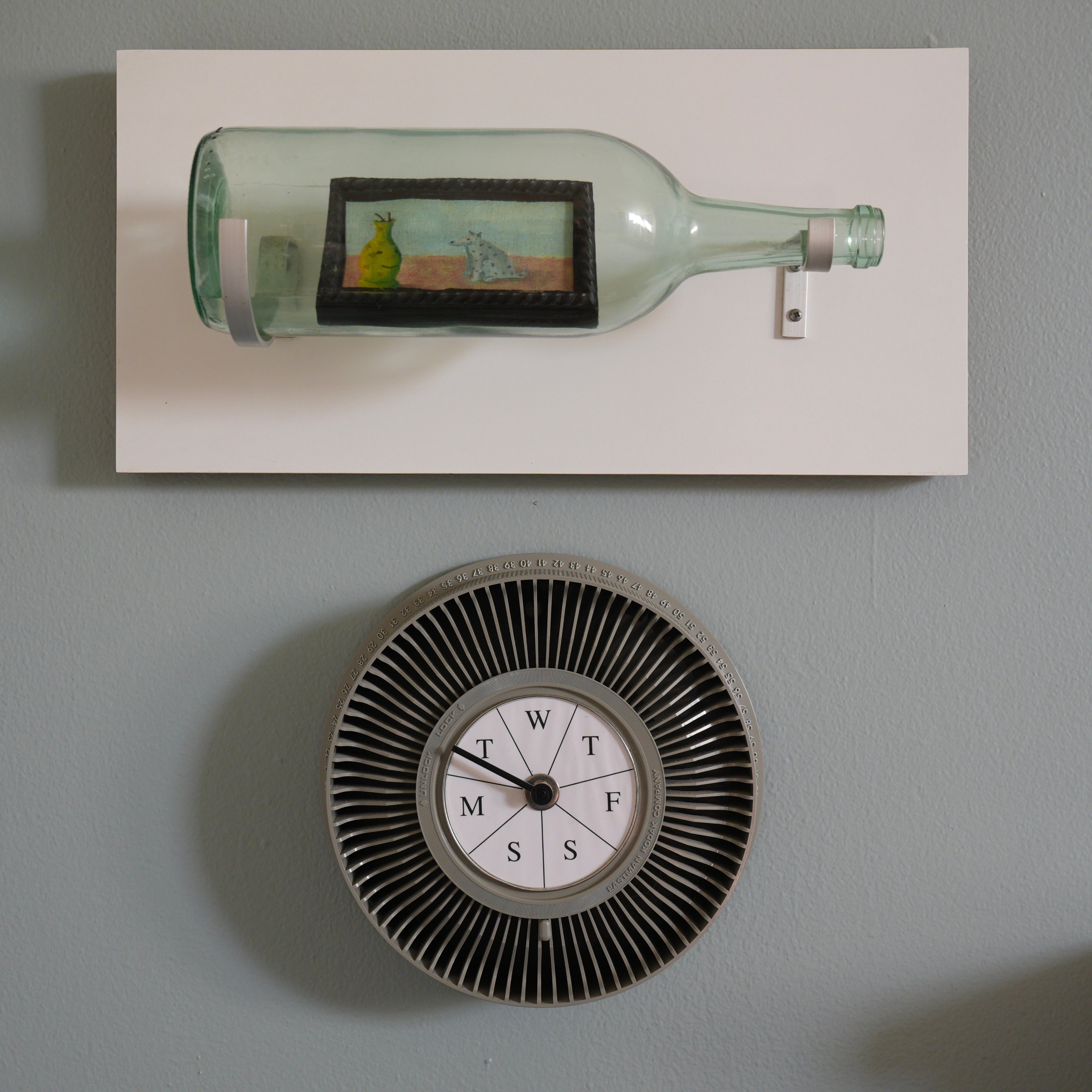
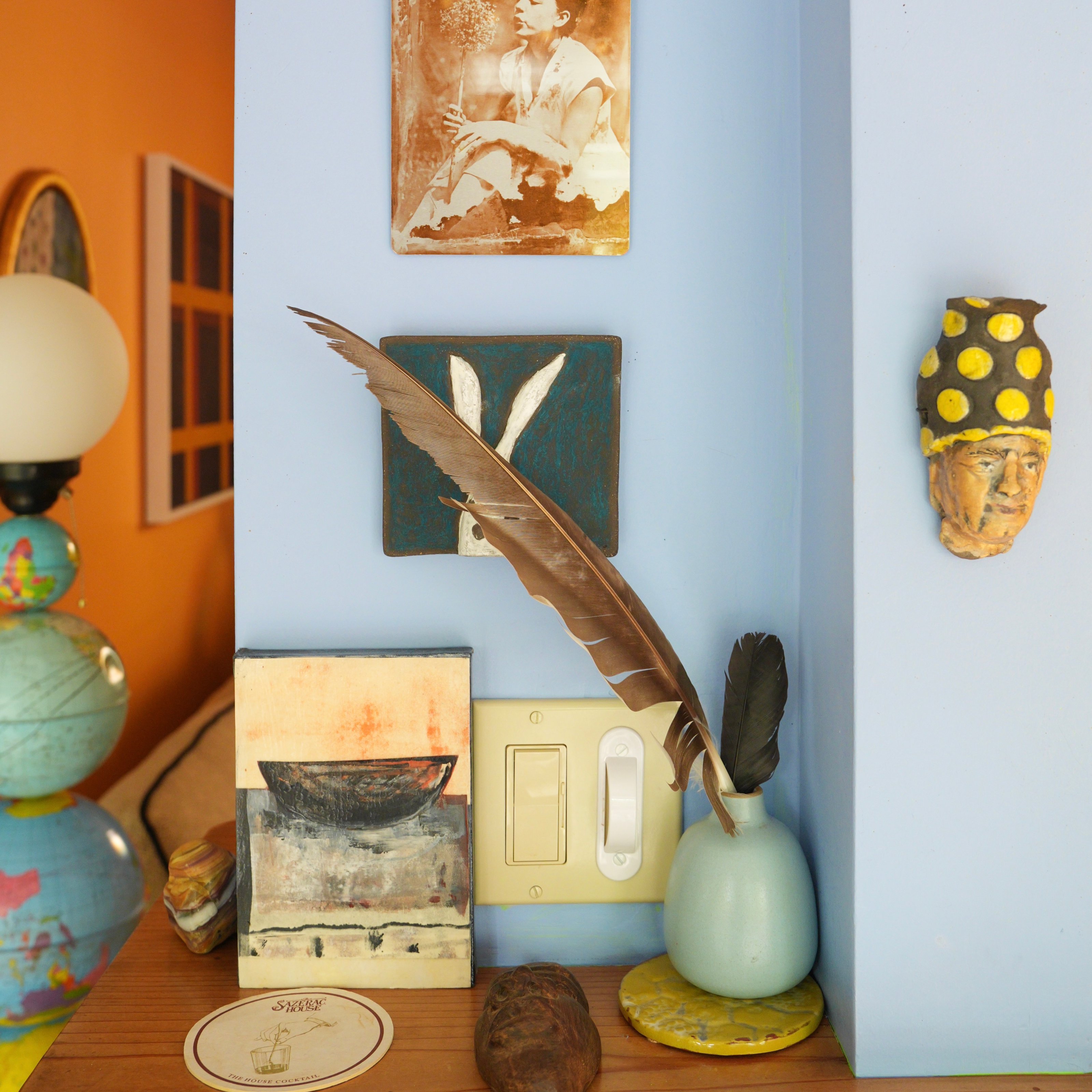
The House Project II. part 2
Additional imagery for The House Project II. Collections of artwork at the beautiful and inspiring home of Arden Kwan Tony Plaut Story by Olivia Rogers...
183
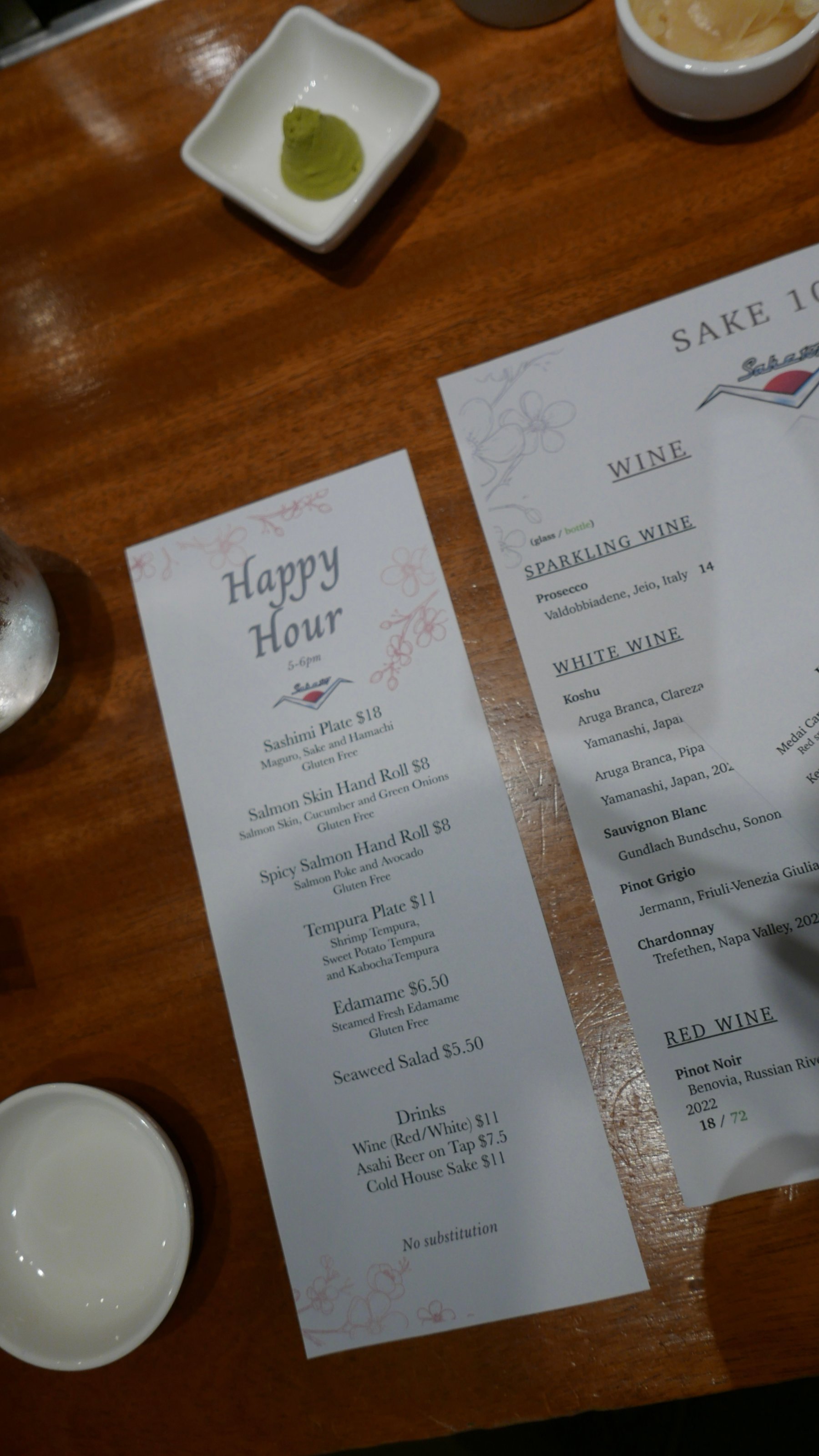
Happy Hour at Sake 107, Kanpai!
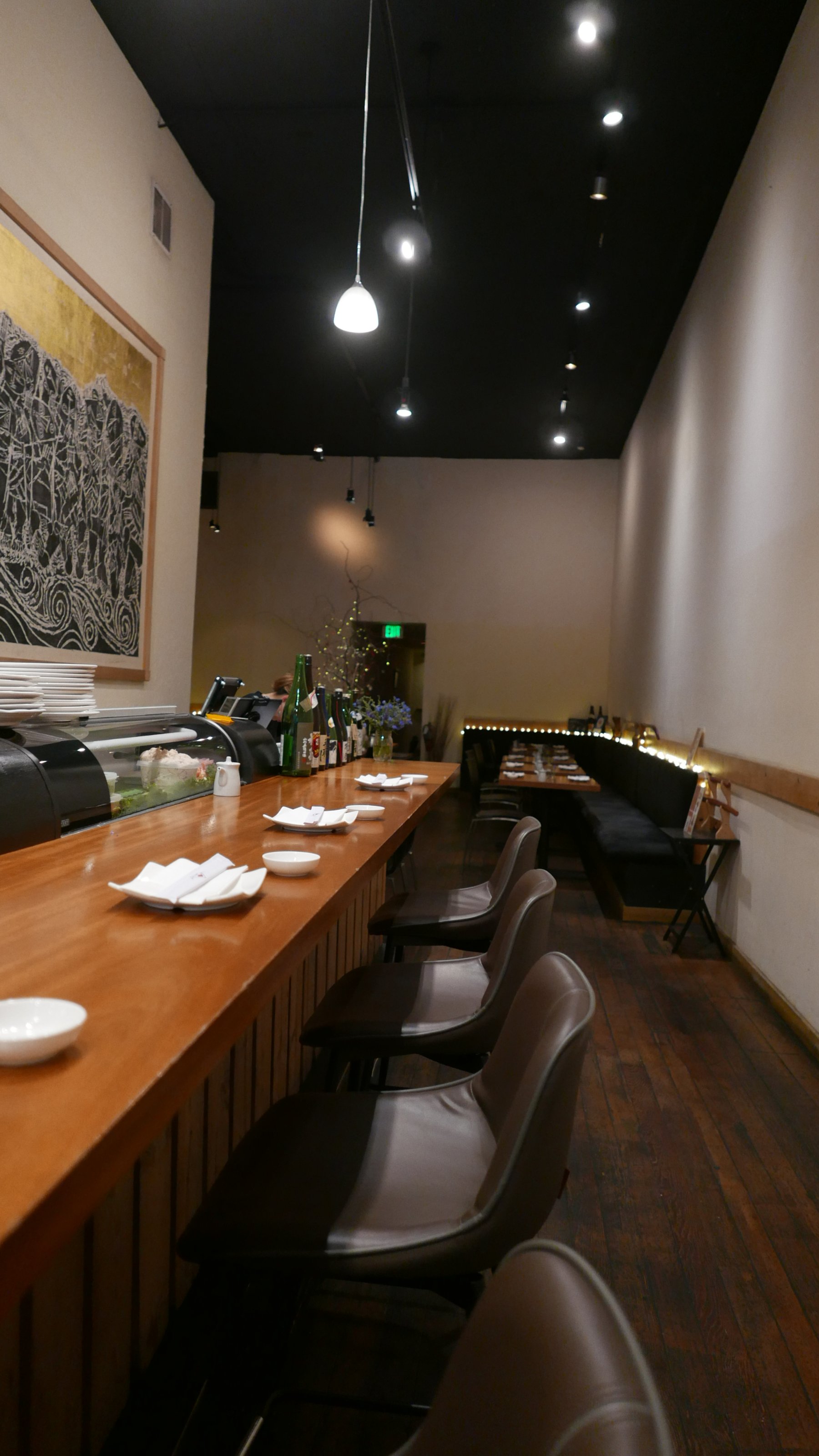
This week’s adventuring in Petaluma food and beverage brings me to Sake 107, a charming Japanese restaurant and sake bar in the heart of downtown. Helmed by chef-owner Eiji Ando, it takes its name from its address as well as its extensive sake list.
My wife and I visited this past Wednesday to try the happy hour (weekdays, 5pm to 6pm), which has its own separate menu. We ordered one of each of the eight small plates, plus a draft Asahi and a glass of sake each.
Seaweed salad (chukka wakame): crunchy and delicate, with generous sesame.
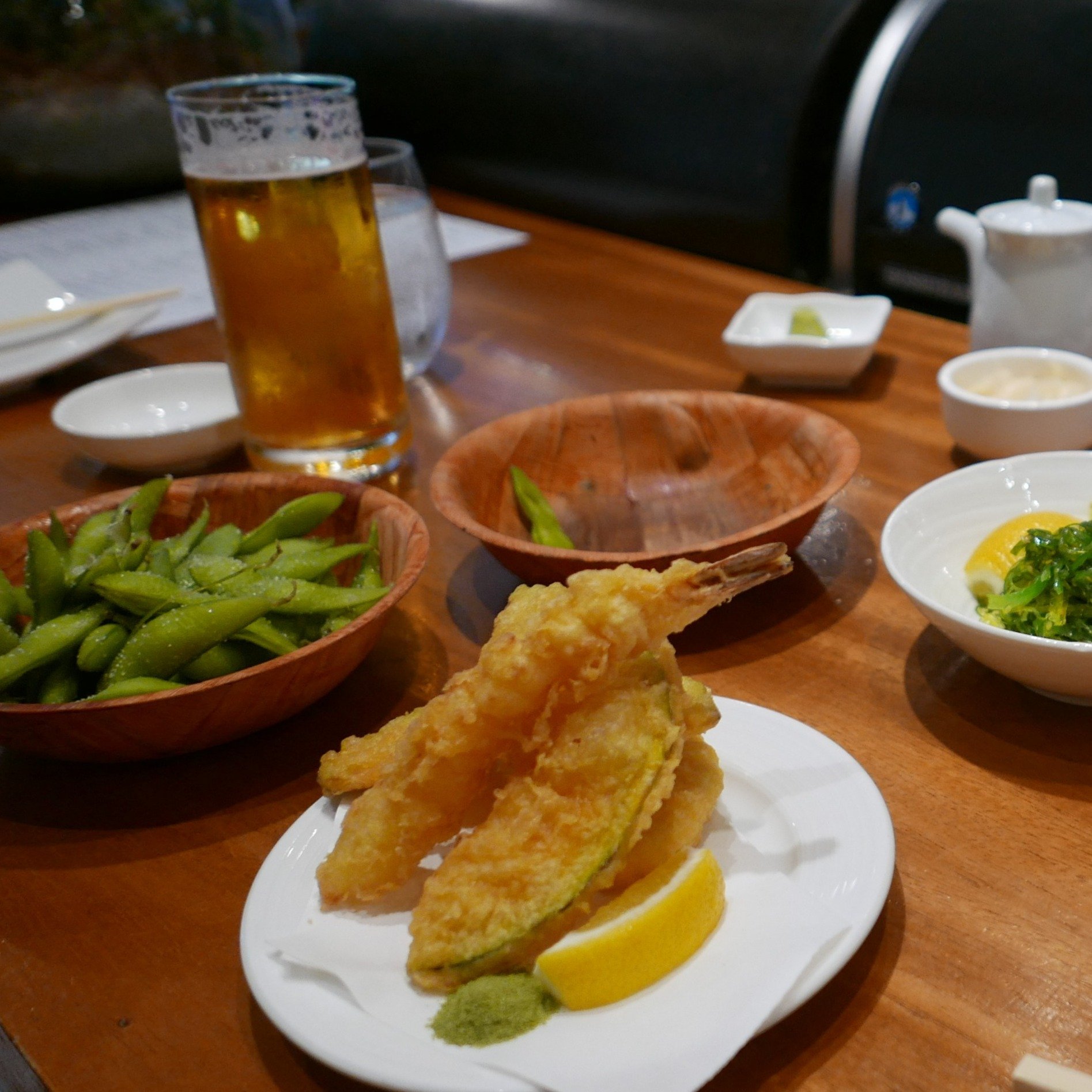
Edamame: simple, fresh, and a perfect partner for the Asahi.
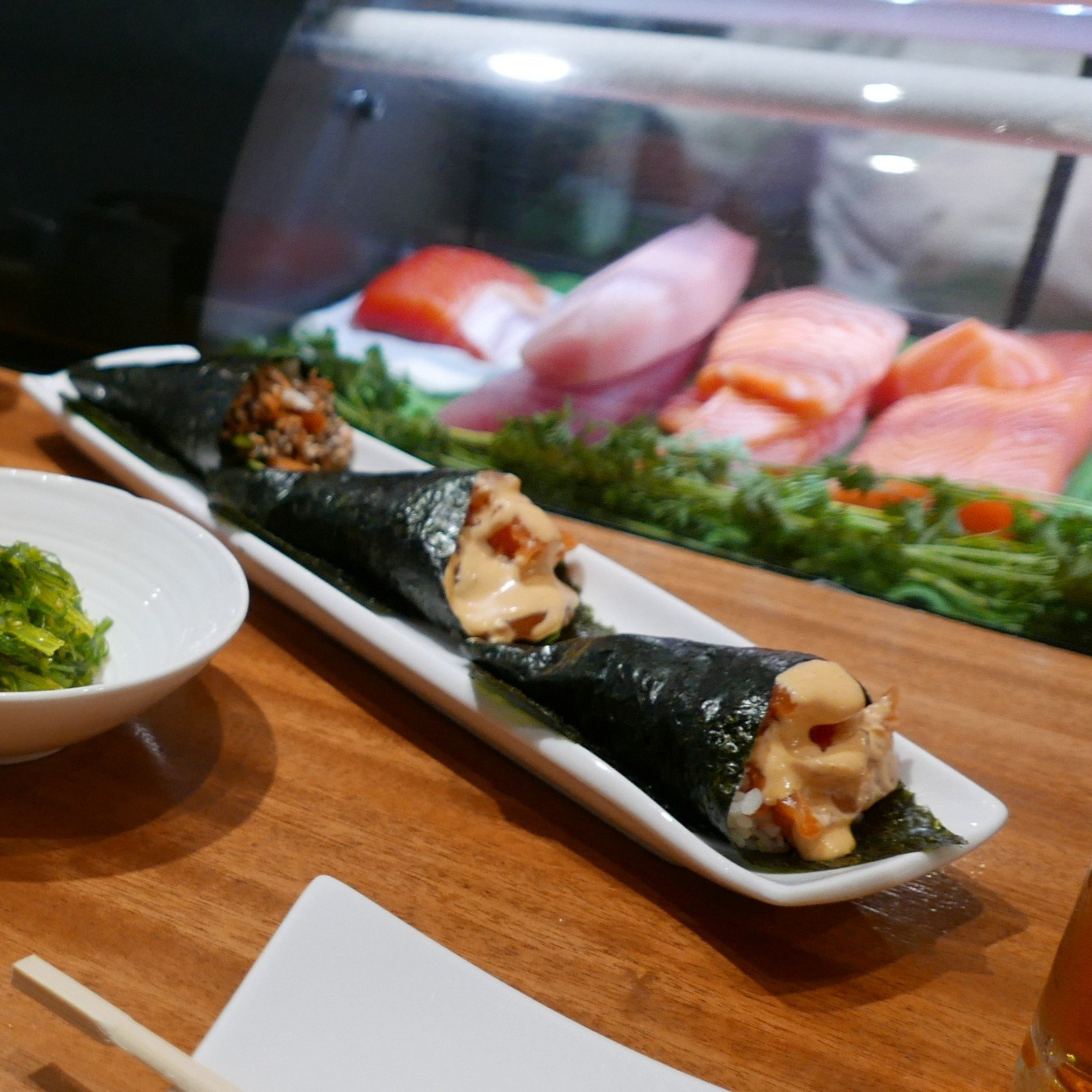
Handrolls: the salmon skin (sake-kawa) is roasted until crispy and rolled with sushi rice, cucumber, and green onions, with a lovely roasted salmon flavor and rich, rendered fat. The spicy salmon is fresh and piquant, creamy thanks to avocado.
Sashimi plate: 2 pieces each of maguro (tuna), hamachi (yellowtail), and sake (salmon), which is a different “sake” from the drink. The maguro was fresh and pleasantly sanguine, the hamachi more toothsome, the salmon velvety and rich.
Tempura: prawn, sweet potato, and kabocha (Japanese pumpkin) with matcha salt. The prawn was crisp yet succulent, the sweet potato pleasantly tender, and the kabocha perfectly autumnal, sweet and earthy, and possibly my favorite bite of the meal.
Fun fact Friday: Portuguese missionaries introduced frying to Japan in the 16th century, frying fish and vegetables during Lent when they abstained from eating meat. The word tempura likely comes from the Latin tempora (“times”), though the exact origin isn’t certain.
To finish, a glass of cold house sake, Genbai-san Onikoroshi (“Genbai-san’s Demon Slayer”), a traditional honjozo (rice polished to remove at least 30% of the outer grain, with a little distilled alcohol added to lift the aromatics). It’s brewed by Yamamoto Honke in Fushimi, Kyoto, with soft spring water called Shiragikui, “water of the white chrysanthemum.” Served cold, it was clean and light-bodied, with soft rice, a hint of melon, and a dry finish that cut nicely through the tempura.
The whole spread (six dishes, two Asahis, two sakes) came to $94 before tax and tip. The handrolls and sashimi are great values, but my pick is the tempura: prawn, sweet potato, and that kabocha. The edamame and seaweed salad are fine starters, but the real action is further down the menu....
314



More Than a Science Class
How Petaluma's Marine Science Program Brings Learning to Life
With contributions from Megan McClelland
If you ever get the chance, step inside Room F11 at Petaluma High School. The classroom is filled with aquatic murals, sharks hanging from the ceiling, detailed student drawings, and notes that hint at the learning and discovery happening inside.
When my own kids were lucky enough to get into the Marine Science Program (MarS) taught by the infamous Phil Tacata, I remember attending Back-to-School Night and feeling a little jealous. I wanted to be a student in that class.
Science Beyond the Classroom
Petaluma High School Marine Science (MarS) is a 4-decade-long legacy program that Teacher Bob Pawlan started in 1990. Phil Tacata has continued this transformative program since 2015, and the students thrive in his classroom.
MarS combines rigorous science coursework with field experiences that take 11th- and 12th-grade students beyond the classroom. Students study marine mammals, ocean currents, kelp forests, wetlands, and how pollution affects marine ecosystems.
MarS is more than learning scientific concepts. Field trips, community service, environmental stewardship, and fundraising are integral parts of the program. Students must participate in local river and beach cleanups and projects with community partners, connecting what they learn in class to the environment right here in Petaluma. Check their Facebook page
MarS gives young people the chance to become deeply engaged in learning, connect with their community, and experience the natural world in ways that can shape who they become.
PHS Counselor and Porches Scout Megan McClelland asked students about their experience in the MarS Program this year. Lino Gomez says, “Mr. Tacata has such a unique approach to teaching: he is funny and grabs my attention as soon as the bell rings.” Inga Markey loves how enthusiastic and engaging Tacata is about our ecosystems and science and is modeling and teaching us how to protect and care for the environment. “It’s so eye-opening how much global warming and climate change impact marine life. Class is so fun because you can see how passionate Mr. Tacata is!” shares Colette Dole.
Three Days of Monumental Change
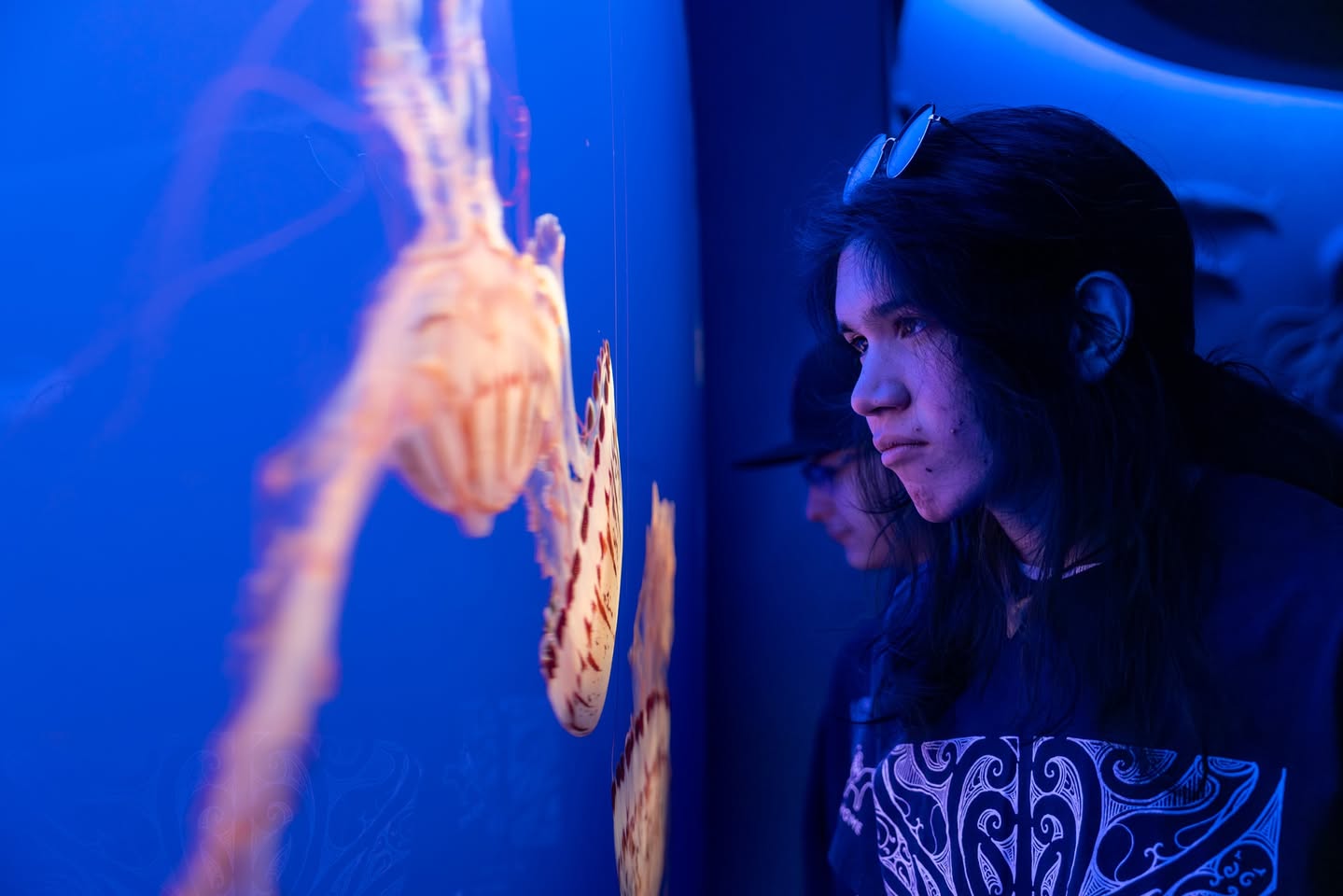
At the heart of the program is an intensive 3-day, 2-night expedition to the Monterey Peninsula, where students experience firsthand the wonder of one of the world's richest and most biologically diverse marine reserves. During the expedition, MarS students put their academic learning into practice by kayaking with sea otters, whale watching in the Bay, visiting the nation's most prestigious marine science institution, the Monterey Aquarium, spending time on Cannery Row, and visiting the National Steinbeck Center in Salinas. Steinbeck’s novella Cannery Row is required reading before the trip. At night, students bond by playing games, singing karaoke, and putting on a talent show. It’s monumental hands-on learning and community building that doesn’t come from a textbook.
Phil Tacata believes the experiences MarS provides can shape young people in ways that last a lifetime. After the 2025 trip, he reflected, “The memories our teens have made on these trips will shape their lives in ways we cannot predict.” Despite the challenges facing public education, he says community support makes these experiences possible, fostering hope and helping young people build a better future rooted in compassion, justice, and love.
The impact on students lasts far longer than the program and graduation. Senior Max Bozuk (a student of MarS last year and now Tacata’s TA) said, “The program changes the dynamic on how you understand things.” He told Megan it changed how he carries himself as a student. “What I learned in MarS, I now apply to academics and my extracurriculars.” Bozuk will major in Biology in college.
PHS and MarS alum Daphne Perlich is currently an animal technician at the Petaluma Wildlife Museum while she pursues her environmental law degree. Perlich’s involvement in the museum and the MarS Program led her to her current study. She shared that the MarS field trip was instrumental to her studies and that some of her favorite people are MarS alumni. She advises juniors and seniors to tap into Tacata’s infectious passion and take Marine Science: “You will love this class if you have any interest in the oceans, nature, science, sustainability, research, or art.”
Experiential learning matters.
For 11 years, Phil Tacata and a strong volunteer group have raised funds so all students who need financial support can participate. Last year, 50% of students needed a full or partial scholarship to meet the trip's donation requirements, and this year it looks about the same. Community support is so needed.
A major funding source is the annual MarS Dinner & Silent Auction. This year, it is on November 8 at the PHS MU from 5:30-8:30 p.m. The Petaluma community can help ensure every student who wants to participate can attend by donating, attending the dinner, or contributing to the silent auction. Grab a dinner ticket here. link
Students canvassed downtown for silent auction items, and many businesses have generously contributed, but MarS still needs help. Volunteers are asking for donations of items or gift cards for the auction. If you can donate, please email Daphne Perlich at link or Denise Tranfaglia at link
Tacata shares, “If you understand the power of these kinds of experiences for young people, and if you have the means, please donate.” Donations are tax-deductible, and any size or kind of donation is deeply appreciated and will go a LONG way towards supporting environmental education and hands-on learning for this generation of North Bay stewards.
Supporting PHS MarS means investing in more than a field trip. It means helping young people discover new interests, experience the wonder of the marine environment, and develop a deeper sense of responsibility for the world around them.
As Tacata reminds us, “We can teach for a better future.”
And sometimes, that future begins with a classroom full of ocean murals, a few days on Monterey Bay, and a community willing to help students get there.
Photos from FB page (Jason Doiy Photography)...
246
A Patio on the Plaza, a Nephew on the Bread, and Lace House in the Kitchen
We hold our cornerstone businesses close here in Petaluma, even as we cheer every new one that opens. This is part of a Porches series on the town’s legacy businesses, the family-run places now in their second generation of stewardship and vision, and where they’re headed next. First up, we have Della Fattoria.
“I think there’s maybe two hours a day when there’s not people in that building.”
Elisa Weber is talking about Della Fattoria , the bakery and café her family runs on Petaluma Boulevard North. Most of us know the front of the house: the pastry case, the long room, the way you feel swept into a little theater the second you walk in. Elisa is telling me about the rooms where the guest doesn’t go, where the chefs and bakers are carefully orchestrating their work, between café hours, pastry prep and bread baking.
We met at Cucina Paradiso in the afternoon, just after the lunch rush, and sat at the corner of the bar near the window for a chat.
Della’s storefront spaces
At 5 a.m. the mixers come in. Pastry works on the other side of the room, sharing the oven. The kitchen opens at 8 and closes at 2, and once it’s cleaned up, the bread rolls in and the bakers start baking it off. Then come the packers, then the drivers. Every night, three vans leave with bread for San Francisco, Marin, Napa, Sonoma and Calistoga, north as far as Windsor and out to Bodega.
“Bread is our thing,” Elisa says. Wholesale is “really the backbone of our business,” and she still calls her mother’s bread world class.
The story of how Kathleen and Ed Weber turned a home baking habit into one of the best known bakeries in Northern California has been told often and well. Kathleen passed away in January of 2020. My conversation with Elisa is about what she is looking towards next in the legacy of their family business.
The next generation
Elisa runs Della with her brother, Aaron, along with the help of their incredible team including her husband David, who goes by Yunker.
Elisa’s nephew Sam is stepping into the bread baking role, and he’s learning the family’s legacy knowledge from his father, Aaron, who Elisa says is still, technically, the head baker and executive chef.
Sam grew up in this business. He also left Petaluma for a while. He traveled, and when he came back from his last six months abroad, Elisa says, his message was simple: “Okay, ready?” She thinks the leaving part is important. She left Petaluma for years herself, and came back to find everything different.
“It’s different to have a family member than it is to have an employee,” she says. The family wants to keep the artisan side of the work sharp, so they’re working on bringing in externs from the Culinary Institute of America.
Planning for her nephews
Elisa doesn’t have children. Her nephews, she says, “are going to inherit the whole business. And they deserve to have us plan well,” so that when their turn comes to run it, they can afford to live here and do good business.
Part of that plan is at the family ranch, where the Webers live together and work together. The ranch bakery, she says, “is sort of waiting for its next iteration.” What they’d love to do is “build a wood fired sourdough baking school out there and then start to do our ranch events again,” and grow far more of the ingredients the café uses.
The café space today
Della Fattoria backs onto [Putnam Plaza], and the Weber’s recently opened a patio on it. That meant running internet out there, adding cameras and putting up an awning. It was a huge investment, Elisa says, but the park Putnam Plaza needed help. “If we are going to redo this park, Della should probably spearhead that and set a good example.”
Gabe Kleinman and I are stewarding a community effort to improve Putnam Plaza, and Elisa has been and integral voice in those conversations. Her mother pushed for the same plaza revitalization years before.
Elisa tells me she really hates politics. But the fight over the proposed Appellation hotel downtown changed that. “I was like, oh, wow, that can’t be my excuse anymore,” she says. “I have to take a stand and I have to do something now.” She’s a founding member of Renaissance Petaluma, a coalition of downtown business owners backing the hotel, a project that has divided the town.
She is thinking about the whole of downtown and the city, really. “I don’t want it for me in my business,” she says. “I want it for the rest of the town.” She’d like to see the trestle, the plaza and the housing planned near the train station move forward together. “I would really like to see a lot more cooperation from our community and not so much hysteria and fear.”
Team Della Fattoria
Della hires a lot of young Petalumans, and Elisa watches the café change them. “They just come out of their shells,” she says. Some stay a summer before college. Others stay six, seven, eight years. Some of the café’s earliest customers were pregnant when it opened, and Della now employs some of those kids, she says.
She’s loyal to the people they buy from too. A lot of the produce comes from local growers, including Jessica Baron a longtime friend and farmer of Poppy Ridge Farm and Ranch “We will not switch to another linen service from Lace House Linen Supply Inc because it’s cheaper,” Elisa says. “We go with our people.” The baristas pour Straus Family Creamery. Pastry uses Clover Sonoma milk and Straus Family Creamery butter. “Even during the ‘08 crash,” she says, “we never cut corners.”
“I’m grateful that I get to go to work there,” Elisa says. “My job is so great.”
Cheers to that, Elisa. Thank you for the time, the candor, and the delicious bread.
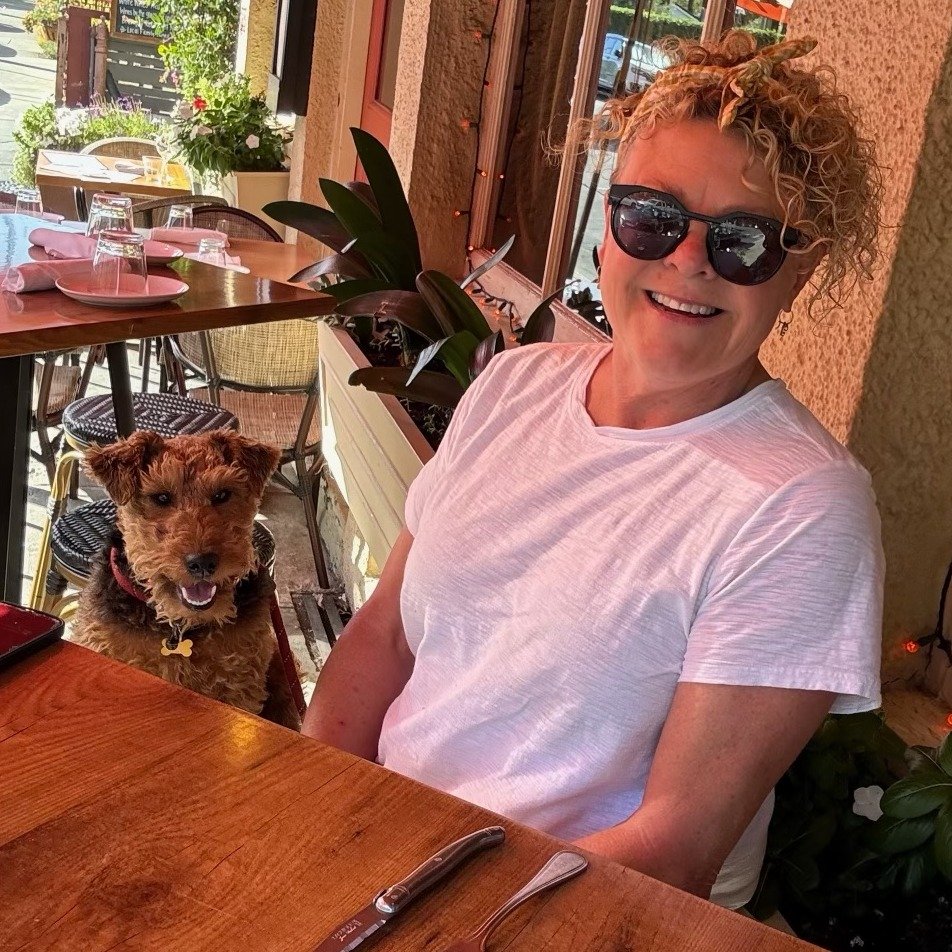
📷: Courtesy of Elisa, taken with her pup Pippin
♦️♦️♦️♦️♦️
If there’s a Petaluma legacy business you’d like to read about or recommend, please let me know!...
292
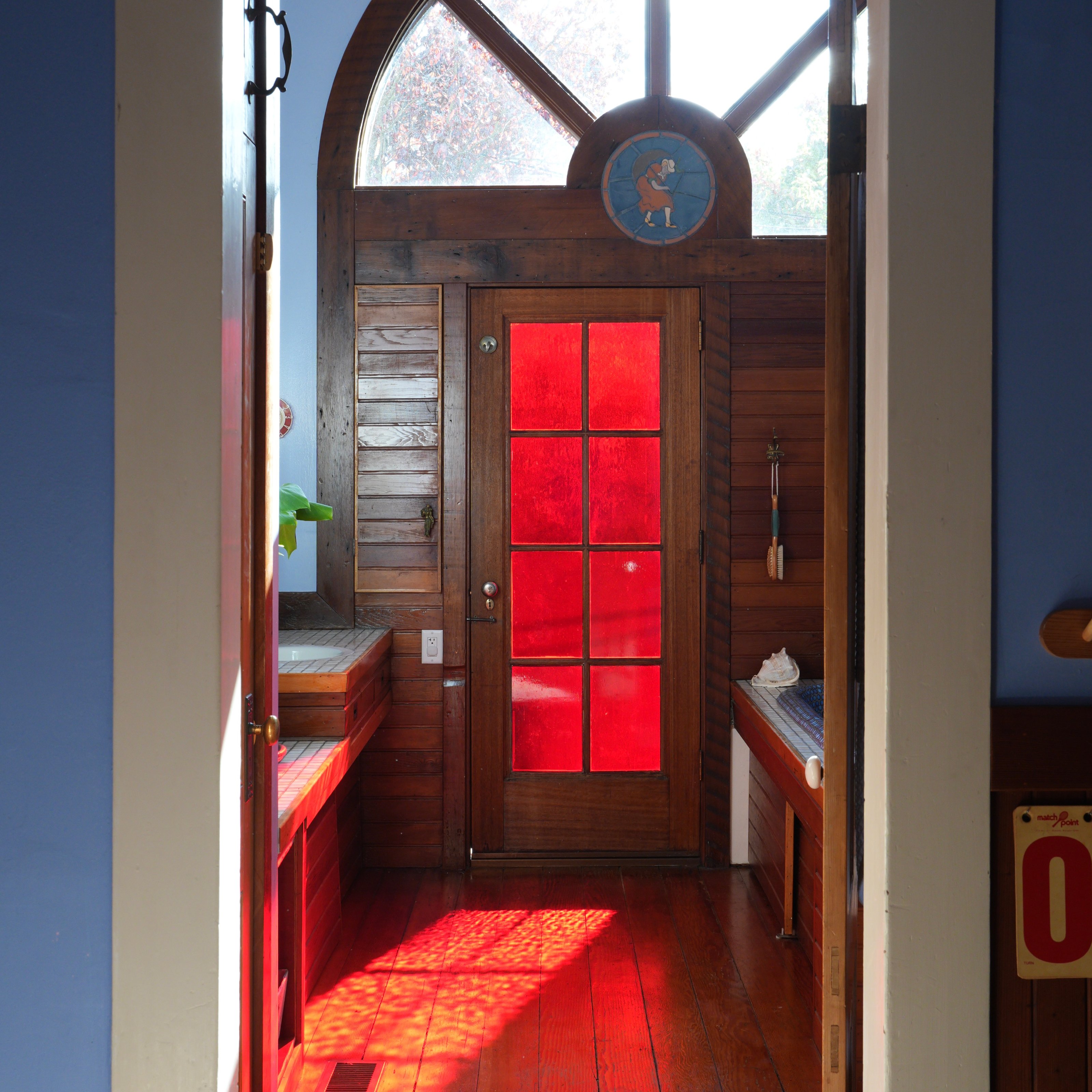
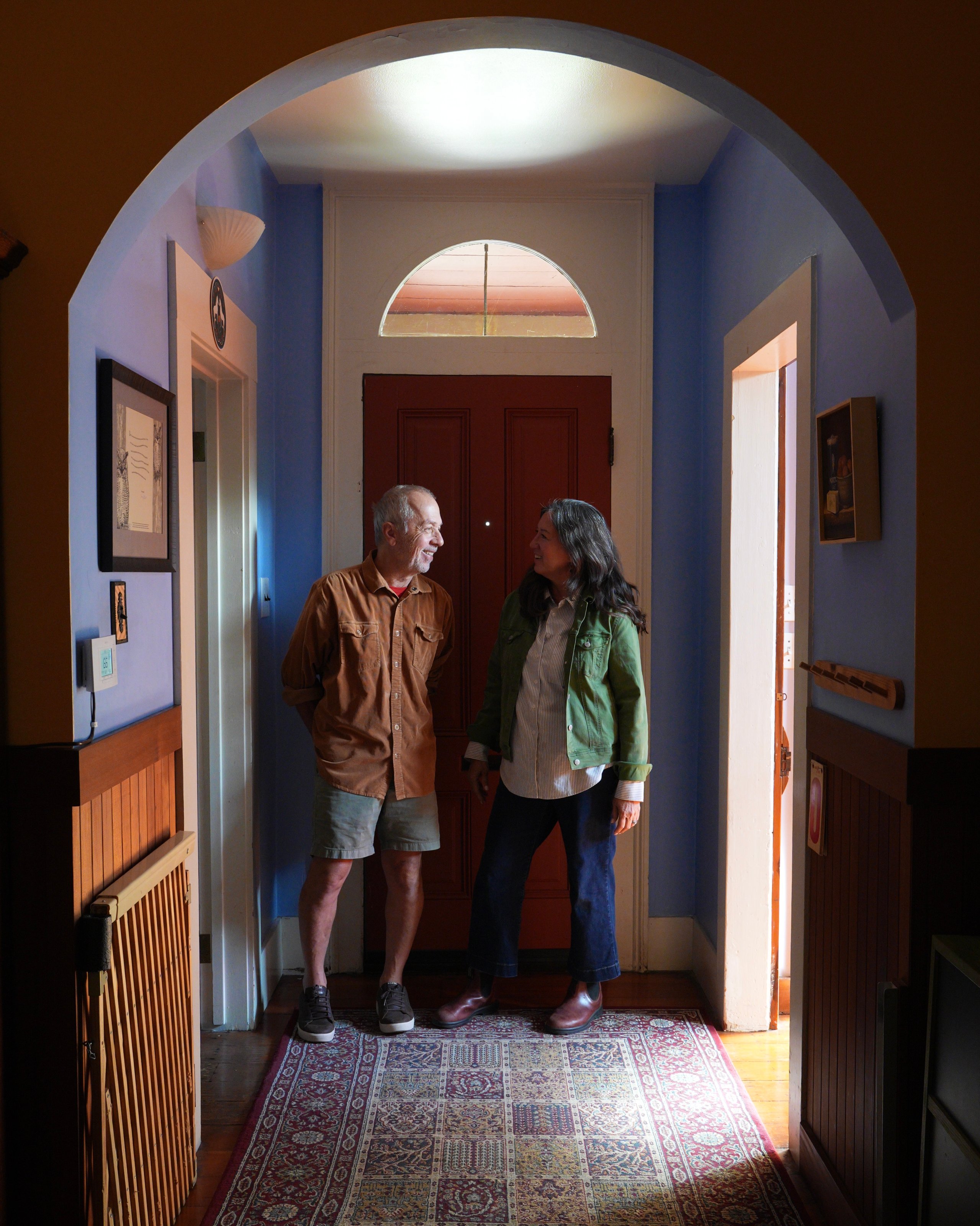
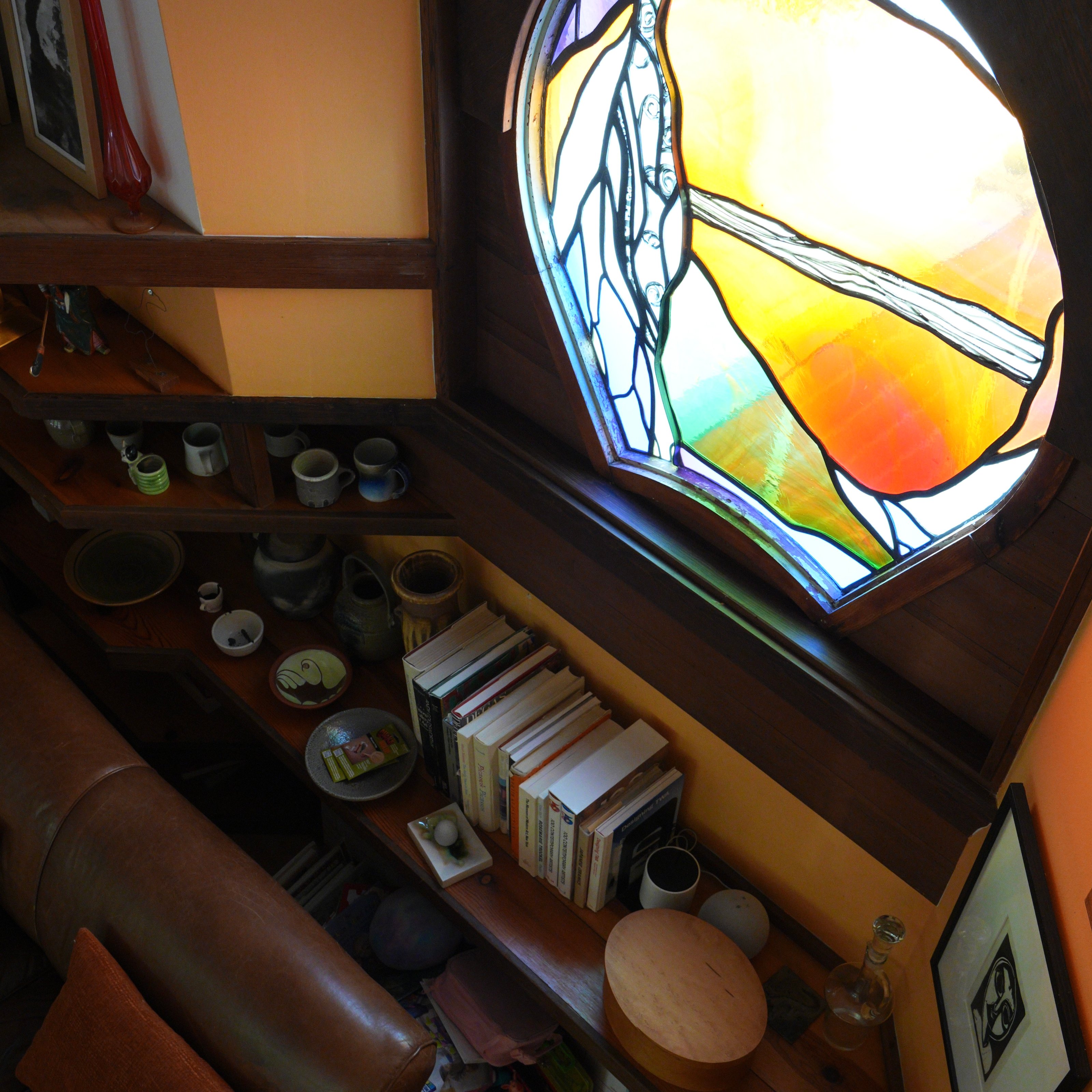
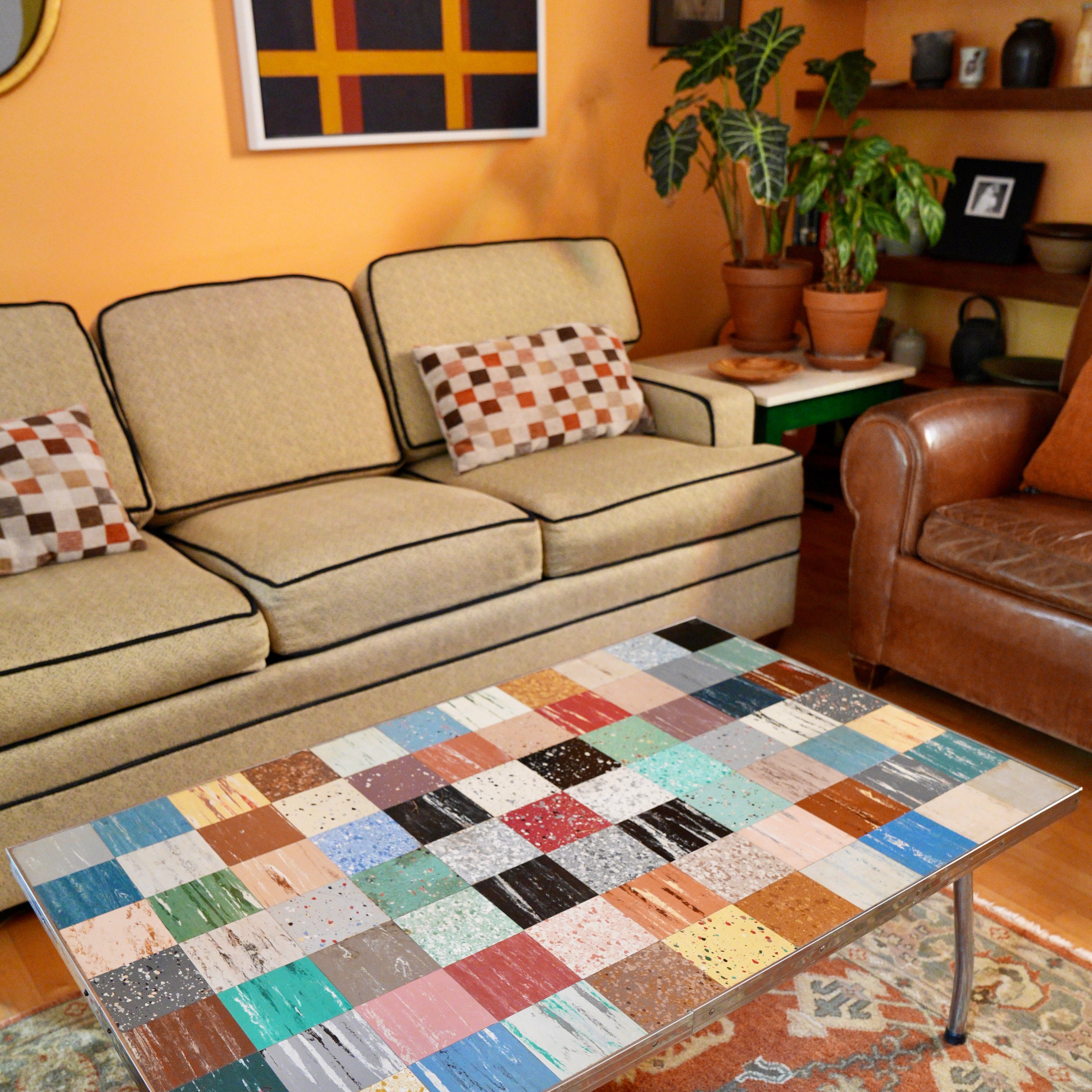
The House Project II.
I love knowing that houses like this exist, and for that matter, people like Tony and Arden.
Rumored to be the summer cottage for Levi Strauss, the original house was built in 1880.
It fell into disrepair and was almost bulldozed to a parking lot for the church across the street when the architect Tom Ward rescued it in the 70s, and added his own quirky and unexpected marks. Arden bought the house in 1994 and raised children here.
Ten years ago, Tony moved in, and with Tony came a lot of art. The two knew each other in college and kept in touch over the years, both raised two daughters with other people and later fell in love and got married in the garden of this house. A retired art professor and jack of all trades, the walls are now covered with Robert Rauschenberg-esque assemblage and sculptures. There are big ceramic bowls Tony made in college and plenty of his beautifully crafted furniture, including a table he made in grad school in Chicago with a top made from old linoleum sample squares - truly one of the best tables I’ve seen. I’m obsessed.
We loved hearing about the molded plaster piece Tony made in a third grade art class, which looks more Arte Povera than elementary, hearing about an art show he had that involved a phone call from Yoko Ono, and watching him type on a typewriter he made that plays music as you press the keys. We loved Arden’s story of adding the red glass panes in the bathroom door, the nooks and secret spaces her grandchildren love playing in, and redoing the stained glass in the living room; it used to feel dark with intense imagery of a sword stabbing a heart shaped vase, representing the suffering of the mother. She commissioned a new piece from a friend, lighter and brighter, to reclaim the space.
The house has a storied past, is filled with life, color, objects, and it continues to evolve. Current projects include finishing a custom dresser for their bedroom, the buildout of their ADU, where an old barn was torn down, now a wood shop and ceramic studio for Tony with a guest suite above, and converting a sunroom into a laundry room, where previous owners grew marijuana. Tony is constantly tinkering and working on the house; Arden loves to cook and plays music in multiple bands. They love to sit at the kitchen table and do crossword puzzles, with Tony's wood-carved self portrait statue close by. Their enthusiasm and enjoyment of each other and their home is palpable and inspiring.
Thank you for welcoming us into your space and letting us share your story, Tony Plaut and Arden Kwan. What a treat.
Photos by Rachel Colla...
3012
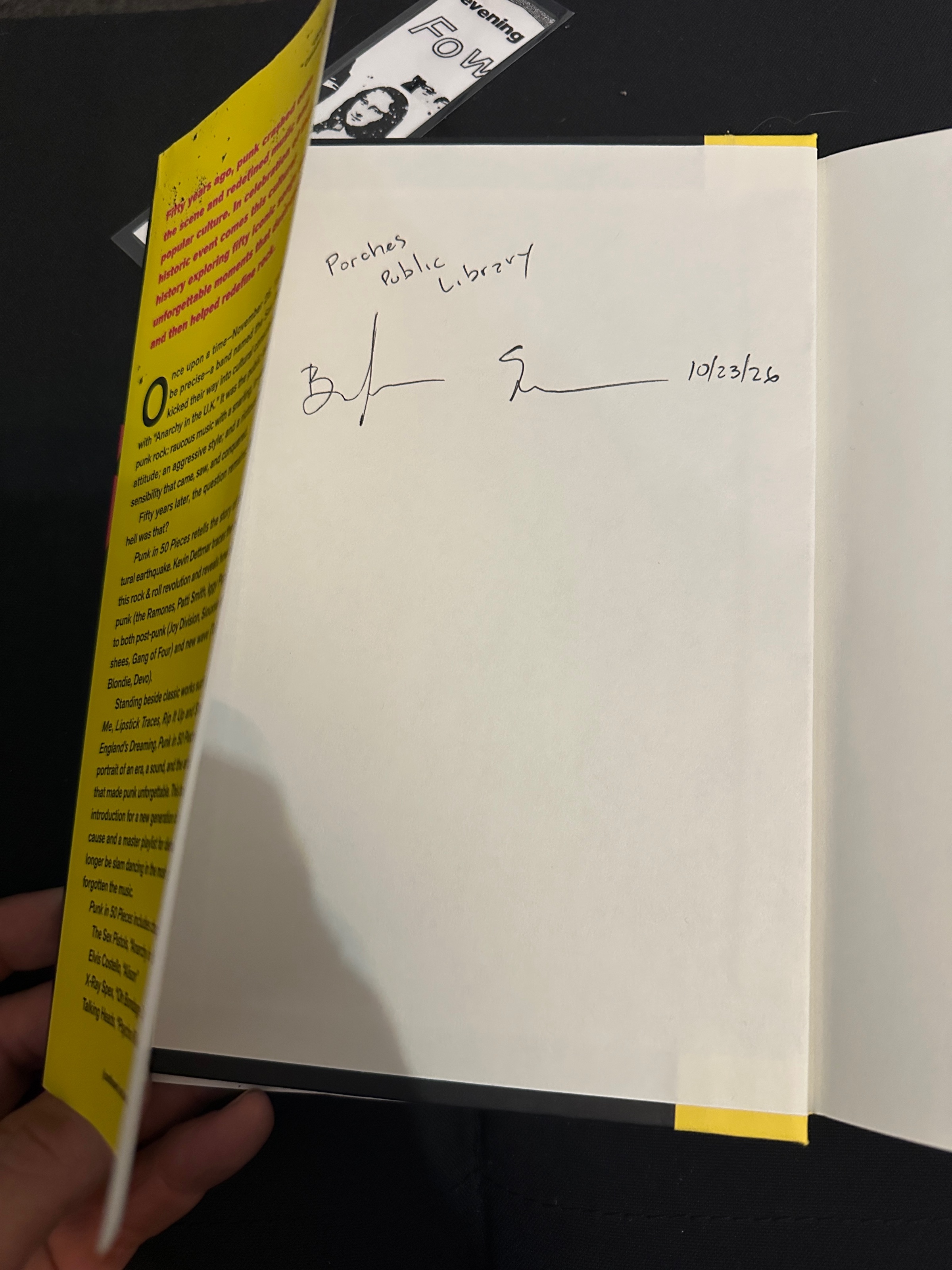
Book Report II: Punk In 50 Pieces [A traveling Book Club feature]
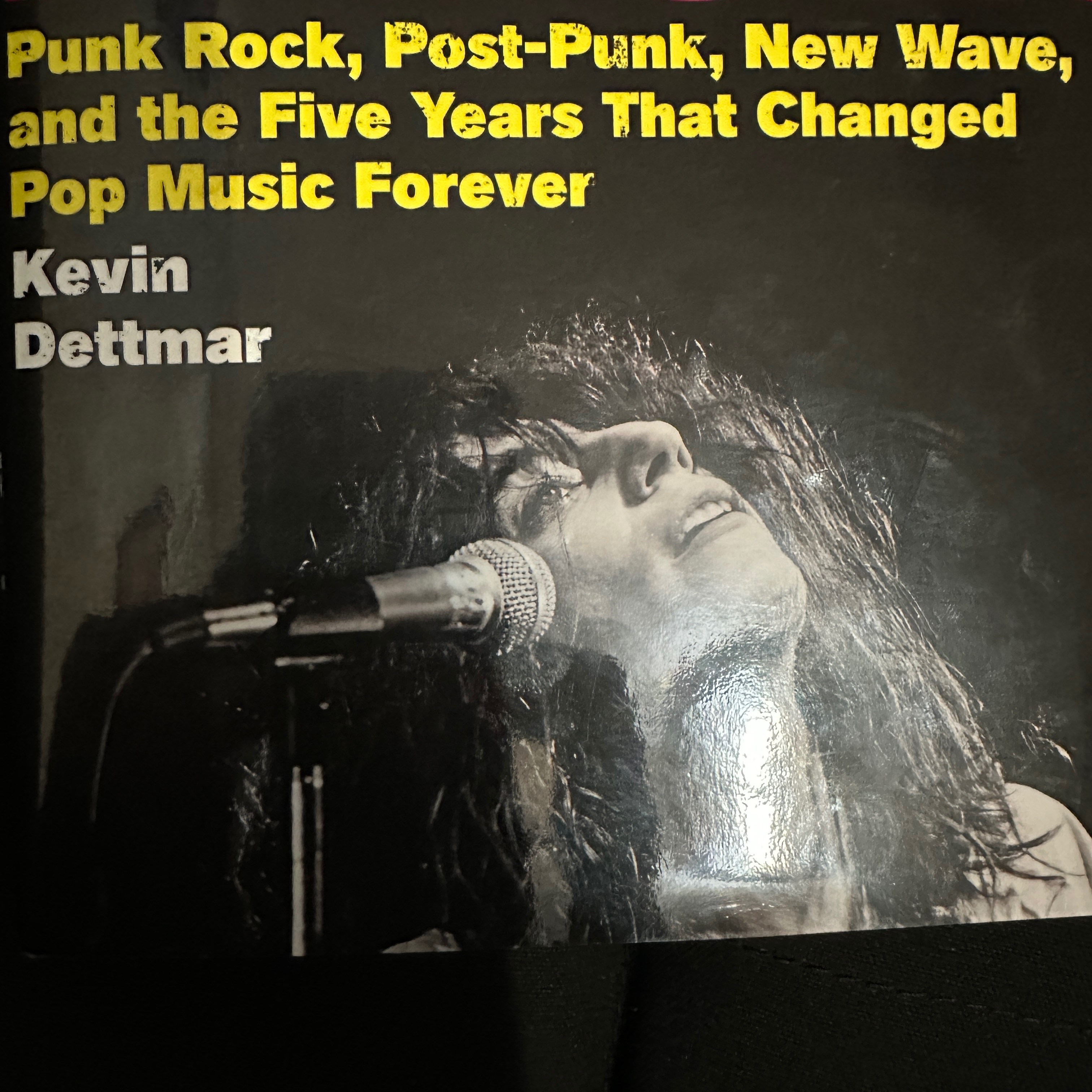
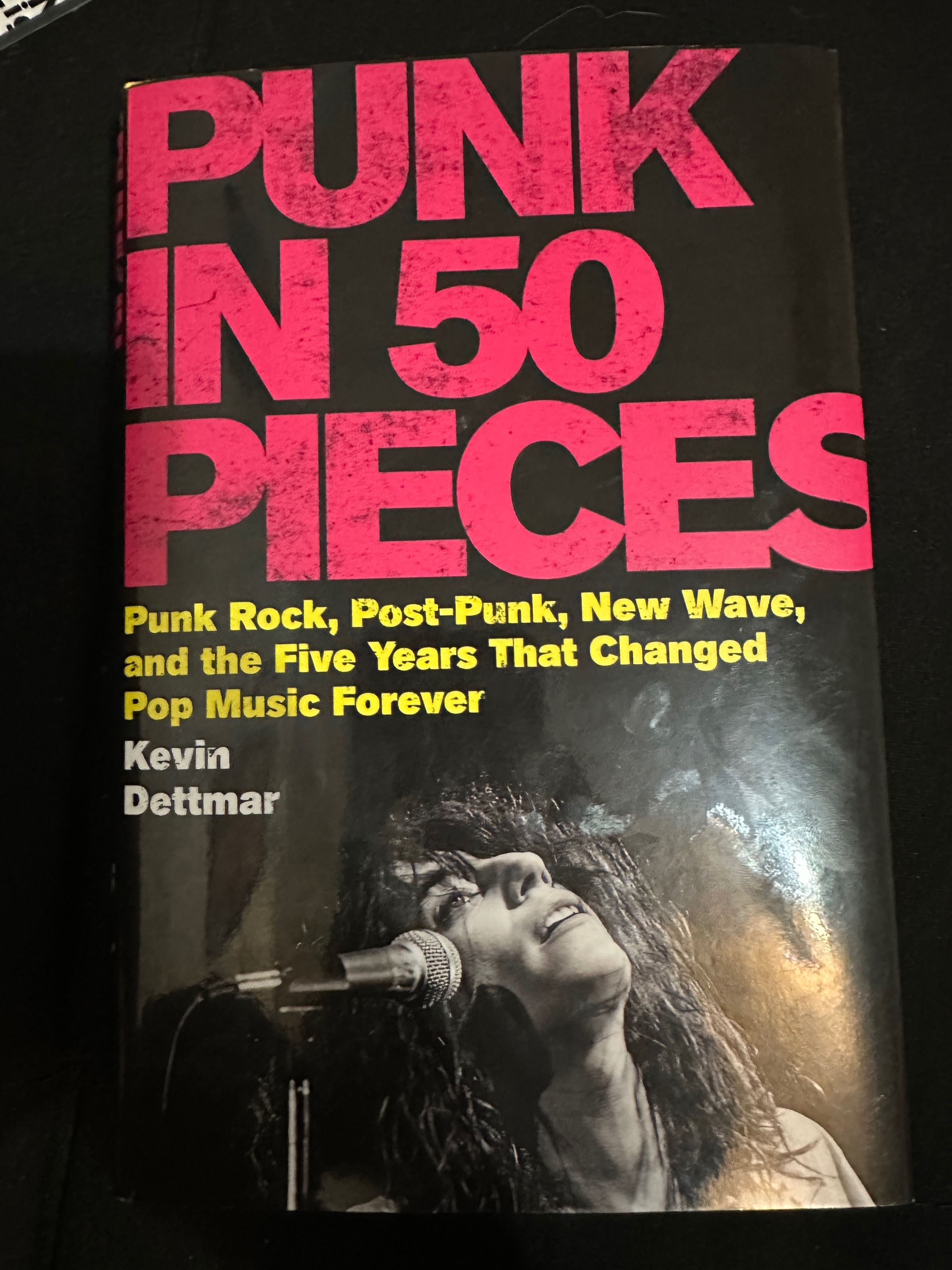
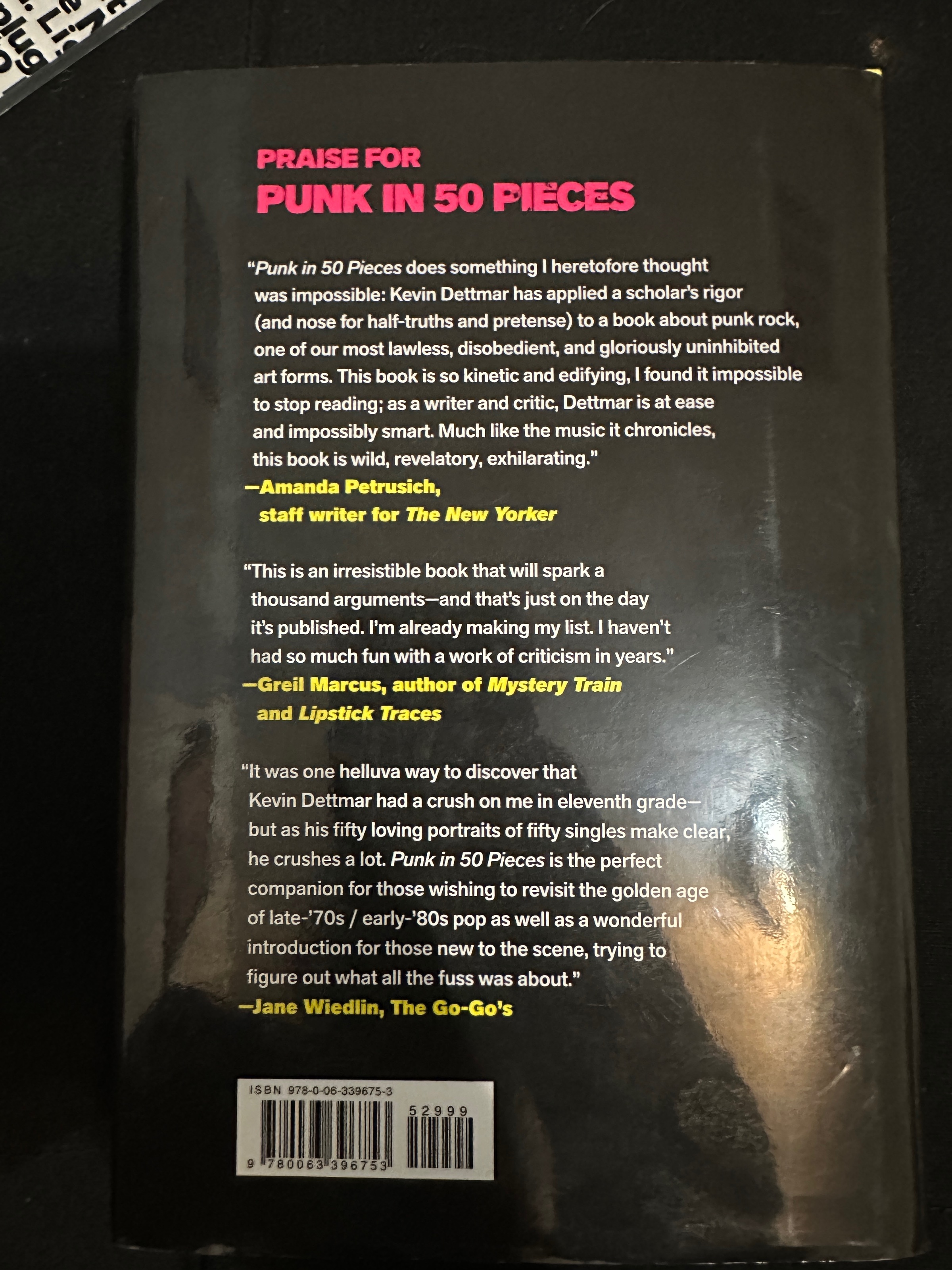
In the hot debate around when punk music was formed, the year 1976 has a commanding lead. If the majority got it right, we are in the middle of the 50th anniversary of punk rock as I type this. Luckily, Kevin Dettmar thought ahead and put together this book punk In 50 Pieces to commemorate the event. It’s a breezy little 250 page book that collects the author's thoughts on 50 different singles that he considers punk rock ground zero. He also includes a wind up of 5 significant prepunk singles from acts like The Stooges, MC5 and Patti Smith to set a base coat, and sprinkles in a few intermission articles discussing cultural landmarks like the safety pin and Doc Martens boots.
You get some very obvious names here like The Sex Pistols, The Germs, X-Ray Spex, etc alongside some that may raise a 90s kids eyebrows like Talking Heads, Elvis Costello and The Police. Music historians have always argued the great big tent of the early “punk” sound but if you still feel some reservations about the use here, be comforted that the bands agree with you. Hugh Cornwell from The Stranglers says on pg 88 “None of us were really punk, but it was an opportunity. Who cares what they call us? This is our chance to get in through the door. We were called punk like Elvis Costello and Blondie were called Punk. But we never thought of ourselves like that”. This makes sense. People who create new movements don’t usually like labels, they are typically trying to avoid genre, make something personal and unprecidented. It’s the journalists, fans, and record store owners that handle the codification.
The great news is, if you always thought there was nothing for you in punk music, a few of the singles here may just change your mind. There is high art minded stuff from Richard Hell who is inspired by Duchamp, the feminist monument that is X Ray Spex, the comically sensitive pre-emo Jonathan Richman, the flash bulb pop of Blondie, etc. There is something for everyone here, and each single is broken out as its own little micro chapter, perfect for when you have 15 minutes to take a break and turn a few pages.
The author was a college freshman at Davis during 1976, and had a direct line to the culture via KDVS, the student radio station that was playing all the fringe sounds. He certainly has his own biases but tries to hold his nose and give his nods to things he dislikes like New York Dolls. It’s a generous effort but I can’t say I am terribly offended by a bias in documenting rebelious music so long as there isn’t an effort made to shout over other histories. If punk is going to live up to its anti authority ethos, then surely it can’t have a canon. I say, let the lopsided history flow.
I came to this book pretty skeptical. An over-discussed topic, coming at a suspicious potential cash grab 50 year celebration opportunity, etc. In the end, I was proven wrong. This was a fun read that had me dusting off some things I had not heard in decades, as well as giving other things their first day in court.
I always thought it was remarkable that a music as simple as punk rock, something people love to point out “could be made by anyone”, would be able to have such a profound impact on so many people. The idea that there was still enough porous area in a three chord song to reach deep down into the listener and light up the heart and mind is fascinating. It’s proof that the mundane can become moving, which always fascinates me. (“We don’t need to see anything out of the ordinary, we already see so much” - Robert Walser). I feel a little ashamed whicn I try to explain that notion to people though, afraid it will be read as a performative sensitiveness or an over worked effort to have profound relationships to music, etc. Maybe it’s easier to point to when John Felice, a founding member of The Modern Lovers, tells the story about how Richman came up with the song Roadrunner that is one of the fifty singles featured: “We used to get in the car and just drive up and down Route 128 and the Turnpike. We’d come over a hill and he’d see the radio towers, the beacons flashing, and he would get almost teary eyed. He’d see all this beauty in things where other people just wouldn’t see it.”
I had to set the book down for a moment.
Punk in 50 Pieces is currently available in the Music section of Copperfield's Books.
Here is a YOUTUBE playlist I threw together with all 55 songs called out in the book. Give it a go, you might be surprised.
This Book is part of the traveling Porches book club, and it needs a new home. If you are interested in taking this book from the last reader, reading it, signing the inside cover, and getting it to the next person, drop your interest in the comments and I will be in touch to coordinate. Looking for 3-4 participants max, the last reader drops it off at Porches headquarters or brings it back to me and I will get it to them....
189
Ask Me Anything: Boomerang Kids, Meet Boundaries
Hey Neighbors!
I want to thank everyone who’s written to me here, or dropped off a question in the special Ask Me Anything box at Porches HQ. I wish I could deep dive into every single one of your excellent queries, but I’ve got a book to write! Meanwhile, I hope you’ll keep reaching out. I’m thinking of doing the occasional speed-round column, giving short-and-sweet answers to multiple questions.
And now for this week’s reader conundrum:
“My adult son moved back home ‘temporarily’ 8 months ago. I could use some advice on how to nudge him back into the world without hurting our relationship.”
Dear Thoughtful Parent,
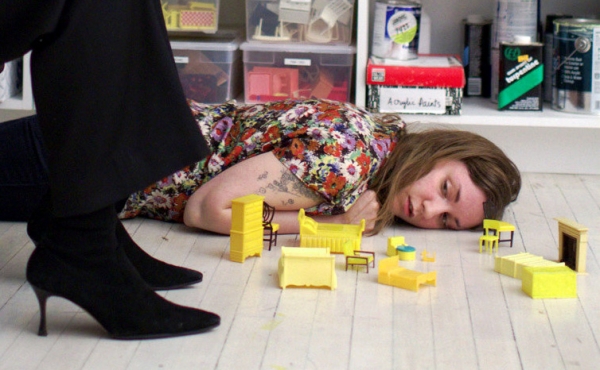
As the mom of a newly minted jobless college grad, I see you! (And by the way, have you seen Lena Dunham's first film, Tiny Furniture? The above photo about sums it up! I think you'll love it.)
To provide an expert response to your delicate question, I turned to the person everyone in my family turns to when we don’t know what the heck we’re doing: my brother-in-law, Marty Schwebel. Marty is a Licensed Marriage and Family Therapist with extensive experience in adult child/parent dynamics. He’s never not straightened me out when I needed straightening. I cannot recommend him highly enough to anyone seeking a Yoda-level therapist in Petaluma, and I’m basically turning this week’s column over to him.
Here’s our edited and condensed conversation about setting boundaries with so-called “boomerang kids,” new adults who’ve left home only to return again…indefinitely?
Is this a situation you’ve dealt with in your practice, Marty: grownup kids moving back home, and everything that comes with that?
Oh yeah, this is a very common situation, especially in Sonoma County, the West and East Coasts, where it’s expensive to live. I’ve been seeing it ever since starting my practice in Petaluma, a decade ago.
Often, a parent will say, ‘Hey, my son or daughter wants to move in. How do I handle this?’ And my first thing is to suggest they start with an agreement. It’s the adult thing to do, right? What are the ground rules? What’s the timeframe? Will we charge you rent or not? What's expected of you as a 'roommate' as opposed to a child living at home? What are your responsibilities and chores? One creative approach that works well is to say, ‘You’ll pay me rent, I’ll bank it for you, and when you move out, I’ll give it back to you for a downpayment.’
How would you advise this parent, eight months in?
So, given that they’re addressing the question now, eight months in, I’m guessing that maybe they didn’t set good boundaries to begin with? This makes it a little more difficult because they’re having to backtrack, which can cause hurt feelings. But the parent can acknowledge this oversight, which goes a long way. They could say, ‘Hey, I’d like to set some expectations about our living together, put something down on paper that we both agree with. My apologies for not doing this at the very beginning, but I didn’t, so let’s do it now. Let’s do a reboot.’ That’s one way to nudge the kid without hurting their feelings or hurting the relationship.
What if the adult kid is struggling to find work and has no clue when they’ll be able to move out?
I’d say to the parent: Help them! It’s time to think of your role as changing from parent to parent/life coach. You can’t parent a twenty-something the same way you did when they were twelve, but you can have a role in their life. Why not take the role of life coach? See, this is a great opportunity to teach them the life skills you wish you would have taught them when they were children. Treat this as a second chance for you to help them become better people in general. Let them know they always have a place to land if they need it, but you want to help them get on the right path.
Any tips on how to life-coach our grownup kids without irritating or offending them?
The only way you’re going to offend them or hurt them is if you’re a dick about it.
Can I quote you on that?
Yeah, don’t be a dick! Treat them like you’d treat your friend or your partner. Respect them. Treat them like an adult. I had a conversation this morning with a client. They said, ‘I have no friends. I’m so lonely.’ And I said, ‘Well, be a friend. Be friendly. You know, to have a friend, you need to be a friend.’ And to be a coach to your emerging adult, all you really need to do is be a loving person in their life.
Maybe it’s that simple? I was walking with my neighbor this morning. She has three adult sons in their forties, one who lived at home for a stint in his thirties. I asked if she had any advice about how to gently prod one’s adult offspring out of the nest, and she said, ‘Well, you just gotta start every conversation by asking them a question. Any question. What are your plans? How can I help you move toward being where you want to be?’
That’s a great approach. Of course, these conversations are always easier when the child/parent relationship is strong to begin with. That’s an important variable. If the relationship is in crisis already, then what can you do? Then you work on the relationship, first. Family therapy can be incredibly helpful to ease parents and emerging adults into this new phase.
*
Coming next week: A hot-sounding “grey divorcée” is ready to dip her toe into the dating pool, but doesn’t know where to start…
135

Two Local Perspectives on El Niño
Fiona called a local hydrogeologist. I called a local meteorologist. Here is what each of them said about what Petaluma should expect this winter.
Forecasters are describing the El Niño forming in the Pacific as possibly the strongest on record. Fiona Monga spoke with Nathan Baskett, a hydrogeologist at Sonoma Water. I spoke with Mark Tamayo, a meteorologist at KTVU who has been forecasting in the Bay Area since 2009. Both of them gave the same advice about how to prepare.
What stood out in Fiona's conversation was how little a strong El Niño tells you about how much rain will fall here. “Just because we’re having a strong El Niño event, that does not necessarily mean we are going to have big rainfall totals and flooding this year,” he said.
Nathan looked at nine strong El Niño events from the past and found that three brought big rains to this area. The other six brought roughly normal totals. The winters people remember, 1982/1983 and 1997/1998, are the wet ones. "It's kind of a selection bias," he told Fiona. "You remember the big ones, and then the not so big ones just kind of fade into memory."
He also told her that Petaluma sits near the northern edge of the area usually associated with wetter El Niño winters, and that El Niño can raise the Petaluma River during high tides.
In my conversation with Mark, he described how those tidal effects can add up. He said ocean temperatures along the shoreline have been unusually warm, which raises sea level. Add the king tides that arrive in November, December, and January; add storm surge from a system coming onshore; and add what are called Kelvin waves, which he described as underwater waves linked to El Niño that travel up the coast and can further lift sea level. He also said the National Weather Service uses a lower threshold for issuing coastal flood advisories in the North Bay than elsewhere around the bay, so Petaluma River advisories may start earlier and last longer this winter than people are used to.
On rainfall, Mark said the models are showing above-normal totals for the whole state rather than only the southern half, and he put the possible range at 150 to 200 percent of average. Pressed for a number, he said he would land in the upper part of that. He also said there is no clear link between strong El Niño years and how many atmospheric rivers show up, so the term that has been in every winter forecast for the past few years does not tell us much about this one. He had been skeptical himself after the last strong El Niño delivered an average year. "The signal is so strong out there, it has to be respected," he said.
How bad the winter gets will depend partly on the spacing of storms, which is something no one can predict. What Mark does expect is more days like the one in January when 101 was shut down in Marin, and drivers spilled onto city streets until they gridlocked.
Both of them said to use this time, the time before the storms start, to prepare. Mark's reminder was about the small waterways rather than the rivers, because a creek that cannot hold much water rises fast, and he suggested checking downspouts and drainage now rather than once the rain starts.
Nathan's was about preparation as its own kind of insurance. "If you plan for the worst," he told Fiona, "you're more likely going to have good outcomes."
♦️♦️♦️♦️♦️...
192

School of Rock is coming to Petaluma
Gregory Bailey left Petaluma as a teenager to pursue music in Los Angeles.
“When I moved away, I said I would never come back,” he told me when we spoke by phone. Now, he’s opening a music school here.
Gregory, the music director at School of Rock Santa Rosa, is opening the Petaluma location with Jake and Joshua Walden, who own the Santa Rosa school. They’ve signed a lease for a corner space beside Safeway in the former G&G shopping center near Kenilworth Junior High, Gregory’s old school. They’re aiming for summer 2027, with the start of the school year another possibility, depending on permitting and construction.
School of Rock combines individual music lessons with band rehearsals and live performances. For Gregory, the appeal is helping young musicians find people to play with.
“All I had was the Phoenix,” he recalled of growing up in Petaluma. He loved the venue, but still struggled to find other musicians who wanted to build a band together and grow as musicians.
His own route involved leaving school three times. First Casa Grande, then two stints at Los Angeles College of Music. A week after leaving the third time, he got a call from School of Rock Santa Rosa. They needed a drum instructor.
He came up for an interview, played for about a minute, and got the job. He moved back that weekend and eventually became music director.
“I never thought I’d be a teacher,” he said. “Let alone even owning my own school.”
The idea started over dinner with Joshua. A later trip to a School of Rock gathering in Nashville convinced Gregory to commit his savings. “I’m pretty sure if I just spend all the money I’ve ever earned, I could do it,” he recalled thinking. “And we did. And now it’s happening.”
He’s seen how much can grow out of a music school. Gregory plays drums in the band 945, whose members all teach at the Santa Rosa location. A student had always wanted them to play together. After she passed away, they formed the band in her memory. “We decided to start the band like she wanted,” he said. “We play in her honor.”
Students now come to their gigs and buy their music and merchandise. “They know all of our songs,” Gregory said.
He’s already taught at Corona Creek and Meadow elementary schools, too. On one of his first visits to the new space, a group of former students rode by on bikes. “Yo. Is that Mr. Gregory?” they called out. They wanted to know what he was doing there. He got to point to the building and tell them where his school would be.
“My new dream, my new goal, my new purpose, I feel like, is to literally have my doors wide open for any kid that was exactly like me and didn’t know where to go.”
♦️♦️♦️
📸: Courtesy of Gregory Bailey
For updates on School of Rock in Petaluma, follow along on Instagram at @schoolofrockpetaluma...
407